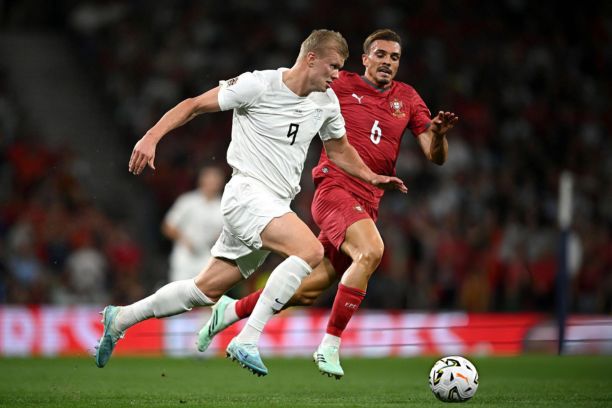
The late-September and early-October international window has temporarily paused club football, but several Premier League players have used the break to sharpen their form rather than lose momentum.
From explosive goalscoring runs in the UEFA Nations League to decisive performances in Africa and CONCACAF, England’s top flight has been represented by players who have looked confident, clinical and influential for their countries.
This ranking looks at the seven most impressive performers from the ongoing International break, using performances recorded through 5 October 2026. Because some national teams still have fixtures to play, this is a snapshot rather than a final verdict.
The emphasis is on direct impact: goals, assists, match-winning moments, consistency across multiple games and the quality of the opposition. It also considers what those displays could mean when the Premier League season resumes.
The list is not simply a roll call of the biggest names. Some established stars have delivered exactly what their countries expected, while others have used international football to strengthen their case for a larger role at club level. That mix is what makes this extended window particularly interesting for supporters of the English Premier League.
How the Top Seven Were Selected
International windows can be difficult to compare because players compete in different tournaments, against different levels of opposition and with different tactical responsibilities. A striker playing three competitive Nations League matches has a different assignment from a winger involved in a friendly or an Africa Cup of Nations qualifier. For that reason, the ranking weighs output alongside context.
Goals and assists matter, but they are not the only measures. A player who drives his national team’s attacking structure, creates chances repeatedly or produces in several matches deserves more credit than someone whose only contribution came in a one-sided game. Momentum also matters. The best international performances are often the ones that send players back to their clubs with greater confidence, a clearer role and fresh pressure on teammates competing for the same position.
That is particularly relevant for the EPL, where a short run of form can quickly influence selection. Managers will be watching not only whether their players return fit, but whether they return sharper. Several names on this list have done enough to create genuine selection questions for their clubs, while others have simply reminded everyone why they are already among the most dangerous players in European football.
1. Viktor Gyökeres – Sweden and Arsenal
No player from England’s top flight has made a stronger goalscoring case during this window than Viktor Gyökeres. The Arsenal striker scored in three consecutive international matches, finding the net against Romania, Poland and Bosnia-Herzegovina. His goal in Sweden’s 1-1 draw with Bosnia-Herzegovina extended a remarkable personal sequence: he became the first player to score in six consecutive UEFA Nations League matches.
That streak is significant because it shows repeatability rather than a one-night burst. Gyökeres has looked comfortable carrying the attacking burden for Sweden, making forceful runs through the middle, occupying centre-backs and attacking space with the directness that made him one of Europe’s most feared forwards before his move to England. He has not needed long periods of possession to influence games. Instead, he has repeatedly turned limited openings into goals.
For Arsenal, the timing could hardly be better. Gyökeres has faced intense competition for attacking minutes early in the campaign, and an international run like this gives a forward something every manager values: confidence backed by recent evidence. When the Premier League returns, he will arrive having scored in every game of the break rather than having spent the pause searching for rhythm.
The wider point is that international football has allowed Gyökeres to play with continuity and responsibility. Sweden have treated him as a reference point in attack, and he has responded by delivering. That matters because centre-forwards often thrive when the tactical message is simple: stay aggressive, make the same dangerous runs repeatedly and trust that chances will come.
There is also a psychological advantage. Arsenal know that a striker on a scoring streak can change the mood around a selection debate. A player who enters the break as an option can come out of it looking like a necessity. Gyökeres has done more than score three goals; he has created pressure for a larger role in the weeks ahead.
Among all English teams represented during this window, Arsenal may therefore receive one of the clearest immediate benefits. If Gyökeres transfers this confidence into domestic football, his international spell could become an important turning point in his early season.
2. Bukayo Saka – England and Arsenal
Bukayo Saka produced one of the most eye-catching individual performances of the entire window when England demolished Croatia 7-0 in Rijeka. The Arsenal winger scored twice as Thomas Tuchel’s side delivered a historic result, combining ruthless finishing with the direct running and intelligent positioning that have made him a central figure for club and country.
A brace in a seven-goal victory can sometimes be dismissed as part of a collective rout, but Saka’s display had more substance than the scoreline alone suggests. He consistently stretched Croatia’s defensive shape, carried the ball into dangerous areas and provided the kind of width that allowed England’s central attackers to operate with freedom. His presence made the attack difficult to compress because defenders could not simply crowd the middle.
The performance also came at a useful moment for Arsenal. Saka already carries huge responsibility in the Premier League, but international football gave him a chance to operate in a different attacking structure and still produce at an elite level. That adaptability is important over a long season, especially when opponents in domestic football increasingly prepare specific plans to limit his influence.
What stood out most was his decisiveness. Saka did not overcomplicate good situations. When England opened space, he attacked it. When chances arrived, he finished them. That combination of patience and aggression is one of the clearest signs of a winger playing with confidence.
There is also a larger England story around him. The national team has several attacking options, but Saka continues to make himself difficult to replace because he offers a rare mix of width, ball progression, end product and defensive discipline. Even in a team full of creative talent, he gives England a specific balance on the right side.
His international form should therefore be encouraging for Arsenal supporters ahead of the restart. The schedule will become demanding quickly, and players who return from national duty in rhythm can make the difference between a slow restart and an immediate surge. Saka looks ready to return as one of the league’s most reliable attacking weapons.
3. Erling Haaland – Norway and Manchester City
Erling Haaland’s international break was not perfect, but three goals across the window are enough to place him high on this list. The Manchester City striker scored twice against Denmark and once against Portugal before Wales kept him off the scoresheet in Norway’s 2-1 defeat in Cardiff.
The fact that a single goalless game feels notable says plenty about Haaland’s international standards. Before the Wales match, he had scored in an extraordinary run of competitive appearances for Norway. His output during this break continued the pattern: when Norway create even a small number of high-quality chances, Haaland remains brutally efficient.
For Manchester City, the relevance is obvious. A fit, confident Haaland remains one of the defining forces of the Premier League. His movement pins defensive lines deeper, his acceleration turns ordinary passes into dangerous attacks, and his finishing changes the risk calculations of opposing teams. International goals reinforce those habits because they keep his timing and confidence sharp.
Haaland also benefits from the contrast between Norway and City. At club level, he frequently plays against deep defensive blocks and must make repeated runs while waiting for service. With Norway, matches can become more transitional, giving him space to attack earlier and more directly. Producing in both environments shows why his goalscoring travels so well.
The Wales defeat may even be useful in a strange way. It prevents the break from becoming too comfortable and gives Haaland another competitive reminder that dominance is never guaranteed. Elite forwards often respond strongly after being frustrated, and City will hope that irritation carries into the domestic restart.
Even with other players producing more dramatic single-game performances, three goals in an international window remain elite output. Haaland has once again shown that his standards are not tied to one system, one coach or one competition. That consistency keeps him near the top of any list involving attacking players from the English Premier League.
4. Wilson Isidor – Haiti and Sunderland
Wilson Isidor has been one of the surprise headline-makers of the break. The Sunderland striker scored a stoppage-time winner against Trinidad and Tobago and then struck twice in a 4-1 victory over the Dominican Republic, giving him three goals across two decisive outings.
His inclusion is precisely why international-break rankings should not focus only on superstar names. Isidor has taken his opportunities with the kind of efficiency that can reshape a club conversation. Goals for a national side do not automatically guarantee domestic starts, but they can change confidence, training intensity and the perception of a player’s readiness.
For Sunderland, that is especially relevant because competition at centre-forward has been fierce. Brian Brobbey entered the break in strong domestic form before suffering a hamstring problem on international duty. Isidor’s goals therefore arrive at a moment when Sunderland may need another forward to step forward immediately.
That possibility gives his performances extra weight. The Premier League is unforgiving when injuries remove a first-choice attacker, and teams promoted or recently promoted into the division often need depth players to contribute without a long adjustment period. Isidor has used the break to show that he can arrive in scoring positions, handle pressure and convert chances when his team expects him to lead the line.
His goals also demonstrate variety in timing. A stoppage-time winner requires composure when a match is stretched and pressure is at its highest. A brace in the following game shows he was not simply living off one dramatic moment. He carried momentum into the next fixture and made it count again.
If he returns to Sunderland with increased minutes available, this could become one of the most consequential international spells on the list. The biggest stars are expected to produce. For a player fighting to establish himself, three goals can alter the next month of his club season.
5. Omar Marmoush – Egypt and Tottenham Hotspur
Omar Marmoush delivered exactly what Egypt needed in their 5-0 Africa Cup of Nations qualifying win over South Sudan, scoring twice and repeatedly threatening the defensive line. His first goal came after he attacked a forward pass and finished under the goalkeeper; his second arrived after another well-timed run, this time rounding the keeper before scoring.
Those actions capture Marmoush at his best. He is most dangerous when he can receive or chase the ball facing goal, accelerate into open space and force defenders to turn. His movement is not only about raw speed. He reads the moment to break beyond the back line and has the confidence to complete the move once he gets there.
For Tottenham, the performance offers encouragement because Marmoush’s profile fits the high-tempo attacking demands of the Premier League. Spurs need forwards who can stretch opponents, attack transitions and threaten from different starting positions. Two international goals are not proof that everything will immediately click at club level, but they are a strong sign that his attacking instincts are sharp.
The context matters too. Egypt had drawn 0-0 with Angola in their opening qualifier, so the South Sudan match carried a need for greater attacking authority. Marmoush helped provide it. Scoring the second and fourth goals gave the result structure, first creating breathing room and later removing any possibility of a comeback.
This is the kind of international performance that can help a new signing settle. Players joining a new league often spend their early weeks processing tactical details, adapting to teammates and dealing with the intensity of a new environment. National-team football can briefly return them to familiar patterns and restore instinctive confidence.
Marmoush will now head back to Tottenham knowing his finishing touch is working. In a league where margins are tiny and attacking confidence can disappear quickly, that matters. His brace was not the loudest story of the entire break, but it may prove to be one of the most useful for his club.
6. Estêvão – Brazil and Chelsea
Estêvão used Brazil’s 4-0 friendly win over India to remind Chelsea why his ceiling is so exciting. The winger scored once and created another, combining end product with the flair and directness that have made him one of the most closely watched young attackers in world football.
For a young player, international minutes can be especially valuable when club starts are limited. They offer competitive rhythm, responsibility and a chance to make decisions at speed against senior opponents. Estêvão did not simply participate; he influenced the scoreline, which is exactly the kind of evidence a player needs when pushing for a larger role after the break.
Chelsea’s attacking depth means nothing will be handed to him. That is why the timing of this performance matters. The club’s coaches can now evaluate a player returning from national duty with confidence rather than one who has spent the break on the fringes. The next challenge is translating that freedom into the tighter spaces and faster defensive reactions of the Premier League.
His profile is particularly useful because he can destabilise organised defences. Estêvão is comfortable receiving wide, carrying the ball inward and creating uncertainty over whether he will shoot, combine or continue dribbling. In a long Premier League season, those one-versus-one qualities become increasingly important when teams face opponents who defend deep.
There is also a broader developmental benefit. Brazil expose young attackers to enormous expectation. Producing a goal and an assist in that shirt can strengthen belief, but it also teaches a player that talent has to become output. At Chelsea, where attacking competition is relentless, that lesson matters.
Estêvão may still need patience before becoming an automatic starter, yet this international window has strengthened his case. If he carries the same decisiveness into club football, Chelsea may find it difficult to keep his minutes limited for long.
7. Florian Wirtz – Germany and Liverpool
Florian Wirtz completes the top seven after a polished display in Germany’s 2-0 win over Serbia. The Liverpool playmaker helped create the opening goal and then scored the second, giving former Liverpool manager Jürgen Klopp his first victory in charge of Germany.
Wirtz’s value is not always captured by goals alone. He manipulates space between midfield and defence, receives on the half-turn and accelerates combinations around the penalty area. Against Serbia, that creativity became tangible output. He did not merely control possession; he helped decide the match.
The performance is timely for Liverpool. The club entered the break with fitness concerns around attacking players, including Alexander Isak and Cody Gakpo. In that context, a confident Wirtz becomes even more important. He can create from central areas, connect midfield to attack and provide a scoring threat without needing to operate as a traditional forward.
That versatility is one reason he was such a major addition to the Premier League. English football demands technical speed as much as physical speed. Players are given less time to receive, scan and release the ball, so elite creators have to solve situations before pressure arrives. Wirtz has the awareness to do that, and his international display was another reminder of his ability to influence matches in multiple ways.
Liverpool will also like the fact that he performed in a high-responsibility role. Germany needed control and imagination, and Wirtz supplied both. That type of performance can accelerate chemistry when a player returns to a club still refining its own attacking structure.
Among the seven names here, Wirtz may have the least spectacular raw scoring total, but his all-round influence earns his place. The best players from an International break are not always those with the most goals; sometimes they are the ones whose performance makes an entire attack function better.
Honourable Mentions
Several players were unlucky to miss the final seven. Bruno Fernandes supplied two assists in Portugal’s 4-2 win over Denmark, while Mikkel Damsgaard scored one and created another in the same match. Michael Kayode made a dream impact for Italy, scoring on his international debut and contributing to an emphatic win over Turkey. Morgan Rogers also scored in England’s 7-0 victory over Croatia.
Mikel Merino found the net for Spain, Oscar Bobb scored again for Norway, and Yoane Wissa struck twice across two matches for DR Congo. Brighton midfielder Malick Yalcouyé made an especially memorable Ivory Coast debut by scoring and winning a penalty, while Brazil’s Bruno Guimarães and Bournemouth winger Rayan also found the net during the window.
These performances show the depth of top-flight representation across international football. The Premier League is not simply sending its established superstars around the world; emerging players, squad options and recent signings are also producing meaningful moments. That depth is one reason the competition’s return after the break will be so interesting.
There have also been important non-scoring performances. Alex Scott impressed on his first England start in the historic win over Croatia, while defenders such as Andy Robertson and Virgil van Dijk produced notable moments for their countries. International football often rewards attacking statistics, but coaches will also be assessing who handled responsibility, tactical changes and pressure well.
Why International Form Can Matter More Than It Looks
It is easy to treat national-team football as a separate world from club competition, but international windows can change the trajectory of a player’s season. A forward who has been snatching at chances can rediscover calm in front of goal. A young winger who has been waiting for starts can return with evidence that he is ready for more responsibility. A playmaker who has been adapting to a new club can spend ten days operating in a familiar role and come back with sharper instincts.
That is why the performances in this ranking matter beyond the goals themselves. The Premier League resumes at a point when managers are still shaping their preferred line-ups for the months ahead. Early-season hierarchies can look settled, but they are rarely permanent. Injuries, fixture congestion and sudden changes in form can reopen a position almost overnight. An international spell that restores confidence can therefore arrive at exactly the right moment.
Gyökeres is a strong example. Scoring in three consecutive matches does not guarantee an Arsenal starting place, yet it changes the conversation. Coaches value what happens in training, but they also value recent competitive evidence. A striker returning with repeated goals has demonstrated timing, movement and composure under pressure. Those are transferable qualities, even when the tactical context changes. The Premier League is full of small selection battles that can be decided by a player making himself impossible to ignore.
The same applies to younger players such as Estêvão. Development is not linear, and young attackers often need a sequence of positive actions to build belief. Scoring for Brazil and setting up a teammate can make the next club appearance feel less like an audition and more like a continuation. Chelsea still have to manage his minutes carefully, but confidence is a powerful accelerant for players who already possess elite technical ability.
International football can also remind clubs of qualities they are not currently seeing enough. A player may be used in one position domestically and another for his country. He may receive the ball in different zones or be given greater freedom to attack. If that alternative role produces results, a club coach gains fresh evidence. The Premier League is tactically diverse, so versatility can be the difference between being a specialist option and becoming a regular starter.
There is another side to the argument: international form can be misleading if the opposition is weak or the match is unusually open. That is why this list does not rank every goal equally. Repetition matters. Match context matters. The ability to influence more than one fixture matters. A single spectacular moment is valuable, but a sequence gives coaches more reason to believe the performance can survive the return to domestic football.
This is also where the experiences of English teams begin to diverge. Arsenal may be thinking about how to use Gyökeres’ confidence, Sunderland may be considering how Isidor’s goals alter their forward options, and Chelsea may see Estêvão as a player pushing harder for a start. Liverpool, meanwhile, can look at Wirtz’s display for Germany as reassurance that their creator is finding rhythm at a useful time.
The restart will bring a different kind of pressure. Stadiums are tighter, opponents are more familiar and club tactical systems are more detailed. Players will have less time to celebrate their international contributions because points immediately become the priority again. Yet that does not erase what happened during the break. Momentum can travel. A confident first touch, a quicker decision or a striker making one more aggressive run can be the product of a successful ten days away.
For that reason, the best international performances are worth tracking closely. They do not predict the future, but they can reveal who is physically sharp, mentally confident and ready for greater responsibility. As the Premier League moves into its next phase, those marginal gains may prove far more important than they appeared while club football was paused.
The next two or three domestic matches should therefore provide the real follow-up to this ranking. If Gyökeres starts scoring for Arsenal, if Isidor earns additional minutes, if Estêvão pushes into Chelsea’s XI or if Wirtz becomes even more central to Liverpool’s chance creation, the international window will have had a measurable effect. The Premier League rarely gives players long to build momentum, so arriving with it already in place can be a major advantage.
What These Performances Could Mean When Club Football Returns
The most important question is not who won the international break; it is what happens next. Players return to clubs with different levels of fatigue, confidence and fitness. Some managers will immediately restore their established starters. Others may feel compelled to reward a player who has just delivered two or three strong international performances.
Gyökeres is perhaps the clearest example. A three-game scoring streak gives Arsenal a compelling reason to reconsider the balance of their attack. Isidor’s goals matter because Sunderland may need him more urgently after injury problems elsewhere. Estêvão’s goal and assist strengthen his case for increased Chelsea minutes. Wirtz returns to Liverpool having influenced a Germany win at a time when Liverpool’s attacking fitness picture is uncertain.
For Saka and Haaland, the question is different. They are already central players. Their job is to preserve momentum without allowing the physical load of national-team football to reduce their effectiveness. That balancing act is a familiar challenge across the EPL, especially after an extended window with multiple fixtures.
The break has also illustrated the risk every club accepts when players leave for international duty. Injuries to several high-profile names have created uncertainty ahead of the domestic restart. That means the positive performances on this list have to be viewed alongside availability. A player can return inspired, but a squad can still be weaker overall if teammates come back injured.
This is why managers monitor international football so closely. They are not only watching goals and assists. They are studying minutes played, travel, tactical roles, knocks and emotional momentum. The return of European football soon after league action resumes will make squad management even more important.
For supporters, however, the simpler story is more enjoyable: several of the league’s most exciting players have stayed hot while club football has been paused. That should make the next round of domestic fixtures feel like a continuation rather than a restart.
Final Ranking
Based on performances through 5 October 2026, Viktor Gyökeres takes top spot because of the consistency and historical significance of his scoring run. Bukayo Saka follows after his two-goal performance in England’s remarkable win over Croatia, with Erling Haaland third after scoring three times earlier in the window.
Wilson Isidor earns fourth place because three goals could materially change his club opportunity, while Omar Marmoush’s brace for Egypt puts him fifth. Estêvão takes sixth after producing a goal and an assist for Brazil, and Florian Wirtz rounds out the seven after combining creativity with a goal in Germany’s win over Serbia.
The order is open to change because the window is still active, but these seven have already made strong cases. When the Premier League resumes, the most interesting test will be whether their international momentum survives the transition back to club football. That is where this break will ultimately be judged.
For now, Gyökeres has been the standout. Three goals in three games, combined with a record scoring streak in the Nations League, give him the strongest body of work. Saka’s explosive display, Haaland’s familiar ruthlessness and the breakthroughs of Isidor and Estêvão show how varied the stories have been.
That variety is also a reminder of the global reach of the competition. Players have produced across Europe, Africa and the Americas before returning to clubs that will immediately need results. The next phase of the Premier League calendar will reveal which performances were temporary flashes and which were the start of something bigger.
Image Credit: GettyImages
Read more: Best players in 2025 International Break!
Frequently Asked Questions about International Break
Question 1: Who were the best Premier League players during the October 2026 international break?
Ans: Several Premier League players produced impressive performances for their national teams, including Viktor Gyökeres, Bukayo Saka, Erling Haaland, Wilson Isidor, Omar Marmoush, Estêvão and Florian Wirtz. Their goals, assists and overall influence made them some of the standout performers from the international fixtures.
Question 2: Which Premier League player scored the most goals during the international break?
Ans: Among the leading performers featured in this article, Viktor Gyökeres, Erling Haaland and Wilson Isidor were particularly productive in front of goal. Their scoring form highlighted why they remain important attacking players for their respective national teams and clubs.
Question 3: Why is international form important for Premier League players?
Ans: Strong performances during an International break can improve a player’s confidence before returning to club football. For managers, it can also be encouraging to see key players maintaining match sharpness and producing goals or assists ahead of the next round of Premier League fixtures.
Question 4: Can international break performances affect the Premier League season?
Ans: Yes. Players who return from international duty in good form can carry that momentum into the Premier League season. However, clubs must also consider fatigue, travel demands and potential injuries before deciding how quickly players return to their starting line-ups.
Question 5: When does the Premier League resume after the October 2026 international break?
Ans: The Premier League resumes after the October international fixtures are completed, with clubs returning to domestic competition later in the month. Managers will be hoping their international players return fit and ready as the 2026/27 campaign continues.
Related Articles
Xabi Alonso at Chelsea: Too Soon to Panic? (Matchweek 4 Review)
Premier League: Top 7 Mind-Blowing Records Ever!
Bundesliga Transfer News: 10 Most Expensive Players Ever!
Top 11 Most Expensive Football Transfers in Ligue 1 History!