
In the long and fascinating evolution of football tactics, few roles have been as revolutionary as the false 9. The false 9 is much smarter and more free than the traditional striker, who stays near the other team’s goal waiting for chances to score.
This player doesn’t stay high; instead, he drops deeper into midfield, pulling defenders out of position and making room for his teammates to take advantage of. This movement breaks down defensive structures and changes the way a team attacks as a whole.
The brilliance of the false 9 lies in deception. Defenders expect a striker to act in a certain way, but when the forward drops deep, defenders have a problem. If they follow, they leave behind a dangerous space. If they stay, the forward can do whatever they want with the game.
This simple yet powerful tactical trick has shaped some of the greatest teams in football history, and it has been mastered by some of the most intelligent and technically gifted football players ever to grace the sport.
These players were not just defined by how many goals they scored, like traditional football strikers. They were also defined by how well they could organize attacks, make chances, and control games.
This article lists the top 11 best false 9 players of all time based on how they changed the game, how good they were as individuals, and what they did in their careers.
9. Francesco Totti
Francesco Totti was one of the earliest modern examples of a true false 9, especially during the later stages of his career at AS Roma. In the 2005–06 season, Roma manager Luciano Spalletti made a bold tactical choice by putting Totti as the team’s central striker without using a traditional number 9.
Before that, Totti had played as an attacking midfielder. Totti didn’t stay up front; instead, he moved back into deeper areas, connecting the midfield and attack with amazing intelligence. This change in strategy made Roma one of the most dangerous attacking teams in Europe.
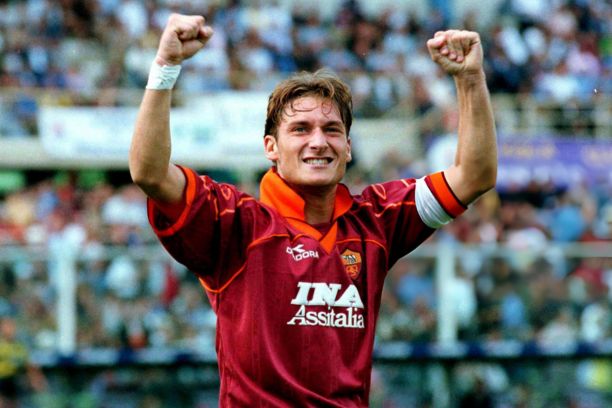
Image Credit: GettyImages
Totti’s vision helped him find runners, his technical skills helped him keep the ball under pressure, and his finishing made sure he was always a scoring threat. During the 2006–07 season, he scored 26 league goals and won the European Golden Shoe, proving that a false 9 could be both a creator and a prolific scorer.
Totti’s success showed that being smart can be more powerful than being strong. He used positioning, timing, and decision-making to control matches instead of just speed or strength.
8. Dennis Bergkamp
Dennis Bergkamp was never a conventional striker. Even though he played as a forward, his instincts were closer to those of a playmaker. At Arsenal, Bergkamp frequently dropped into midfield areas to collect the ball, dictate play, and create chances for teammates like Thierry Henry.
His technical brilliance allowed him to operate comfortably between defensive lines. His first touch was legendary, often eliminating defenders instantly and creating opportunities from seemingly impossible situations.
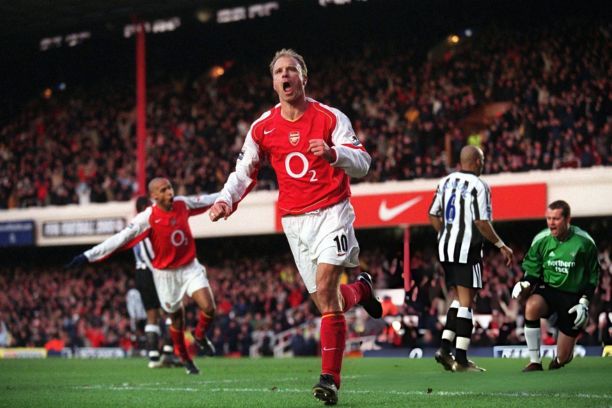
Image Credit: GettyImages
Bergkamp’s intelligence allowed Arsenal to function with fluid attacking movement, and his partnership with Henry became one of the most iconic combinations in Premier League history.
Bergkamp showed that the best attackers didn’t need to stay fixed near the goal. Instead, by dropping deeper and controlling play, he embodied many of the qualities that define a world-class footballer and false 9.
7. Roberto Firmino
Roberto Firmino represents one of the most complete modern examples of the false 9 role.
Firmino wasn’t just a striker for Liverpool under Jürgen Klopp. He was the tactical engine that made Liverpool’s attack work. He could move into the midfield, which gave Mohamed Salah and Sadio Mané room to attack the middle. Firmino was able to connect plays smoothly because he was smart, and he was the first line of defense because he could press.

Image Credit: GettyImages
His movement always broke up defensive formations, which let Liverpool control their opponents with well-planned attacking play. Firmino didn’t always score as many goals as a traditional striker, but he had a huge impact. Firmino helped set up the tactics that led to Liverpool’s wins in the Champions League and the Premier League.
Read also: 11 Fastest Hat-Tricks in Football History
6. Johan Cruyff
Johan Cruyff was not just a football player; he was a tactical visionary. Long before the term false 9 became popular, Cruyff was already playing in a fluid attacking role that blurred positional boundaries.
Cruyff was the main player in Ajax and the Netherlands’ Total Football system. He was always on the move, dropping deep, drifting wide, and making space. He was able to control games from higher up because he was smart. He could score goals, set up chances, and control the pace of the game all at the same time.
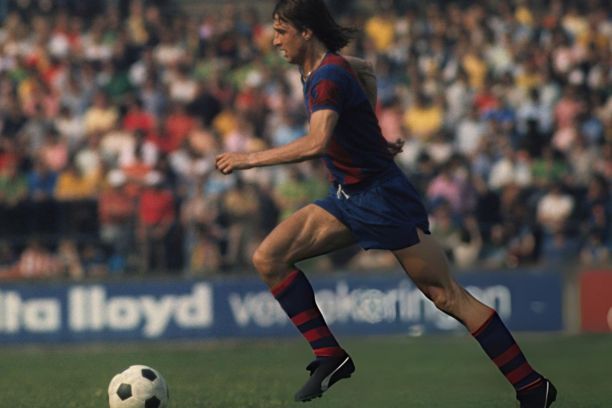
Image Credit: GettyImages
Cruyff’s impact went far beyond his time as a player. He changed the way Barcelona thinks and had an effect on players who came after him.
His ability to operate as both striker and playmaker made him one of the earliest pioneers of the modern false 9 role.
5. Karim Benzema
Karim Benzema’s career perfectly illustrates the evolution of the modern striker. During Cristiano Ronaldo’s time at Real Madrid, Benzema frequently sacrificed his own goal-scoring opportunities to facilitate Ronaldo’s success. He dropped deep, created space, and linked play intelligently. His movement allowed Real Madrid’s attack to function more effectively.
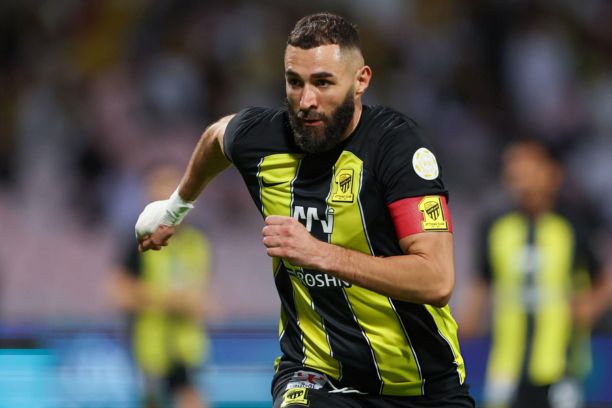
Image Credit: GettyImages
When Ronaldo left the club, Benzema transitioned seamlessly into the primary goal-scoring role while still maintaining his creative responsibilities.
His Ballon d’Or-winning season demonstrated that he had mastered every aspect of the role. Benzema showed that a false 9 could adapt, evolve, and dominate across different tactical systems.
4. Wayne Rooney
Wayne Rooney was one of the most versatile attackers in football history. Although he began his career as a traditional striker, his intelligence and technical ability allowed him to operate in deeper roles. Rooney frequently dropped into midfield, helped build attacks, and created chances for teammates.

Image Credit: GettyImages
His work ethic and tactical awareness made him invaluable. He could score goals, create assists, and control matches simultaneously. His ability to adapt to multiple attacking roles made him one of the most complete forwards of his generation.
Rooney’s versatility and intelligence made him a natural fit for the false 9 role.
3. Alfredo Di Stéfano
Alfredo Di Stéfano was decades ahead of his time. He played as both striker and playmaker, frequently dropping deep to influence matches. His mobility, intelligence, and technical quality allowed him to dominate European football.
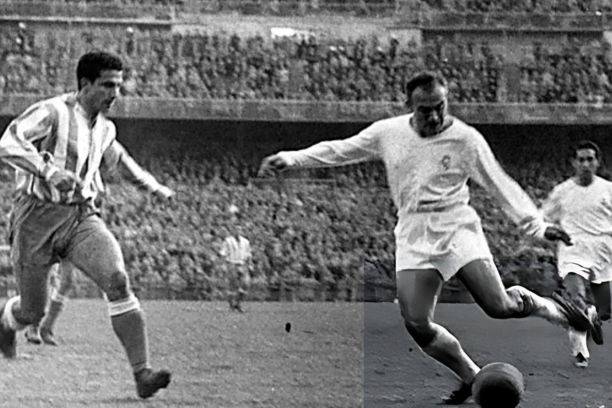
Image Credit: GettyImages
He helped Real Madrid win five consecutive European Cups, establishing the club as a global powerhouse.
Di Stéfano embodied many qualities associated with the modern false 9.
2. Pelé
Pelé’s ability to combine scoring with playmaking made him one of the most complete attackers ever. He did not remain fixed near the goal but frequently dropped deep to control play.
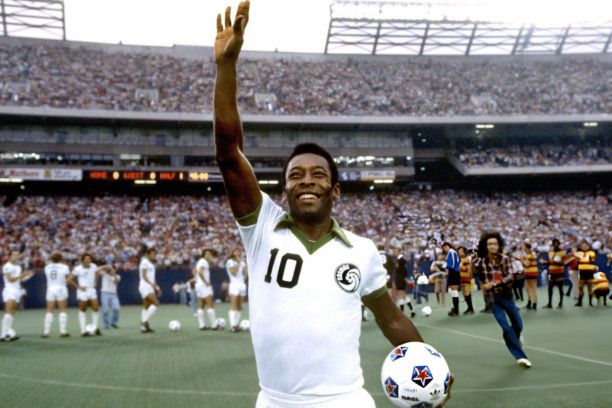
Image Credit: GettyImages
His intelligence allowed him to influence matches in multiple ways. Pelé’s versatility helped Brazil dominate world football.
1. Lionel Messi
Lionel Messi’s transformation into a false 9 under Pep Guardiola changed football forever. Instead of playing as a traditional winger, Messi moved into the central striker position but continued dropping into midfield. This created confusion among defenders and allowed Barcelona to dominate possession.

Image Credit: GettyImages
Messi’s intelligence, vision, and technical ability allowed him to control matches from advanced areas. He scored goals at an unprecedented rate while also creating countless opportunities for teammates.
His performances between 2009 and 2012 remain some of the greatest ever seen in football.
Conclusion
The false 9 role represents the evolution of football intelligence. It transformed the striker from a pure goal scorer into a complete attacking architect. Players like Messi, Cruyff, and Totti proved that intelligence and creativity could redefine tactical systems.
As football continues to evolve, the legacy of the false 9 remains central to modern attacking play.
People Also Ask About False 9
- Was Messi a false 9?
Messi, as a false nine, disrupted that system. Drifting between the lines, he confused positions between striker, midfielder, and playmaker. He overran the midfield, broke up defensive shapes and was the creative pulse of the attack.
- Was Benzema a false 9?
Following Ronaldo’s departure in 2018, Benzema transitioned from the false 9 position into a sole striker. He was named in the La Liga Team of the Season for five consecutive years from 2018 to 2023, won La Liga Best Player twice and the Pichichi Trophy for the first time in 2022.
- Is false 9 a good formation?
One of the main benefits of False 9 tactics is the ability to create an extra man in central areas. By dropping away from the defensive line, the striker draws little immediate pressure from centre-backs and becomes available to combine with midfielders.
- Who is the most famous false nine?
His tactical intelligence, dazzling dribbling skills, and unmatched vision allowed him to drop deep into midfield, draw defenders out of position, and create attacking opportunities. This innovative use of the role was pivotal in Barcelona’s success, rendering Messi’s name synonymous with the false nine.
Related Articles
Top 11 Champions League Goal Scorers of All Time
Top 11 Football Players Who Played for One Club!
Top 11 Best Goalkeepers in the Premier League in 2025