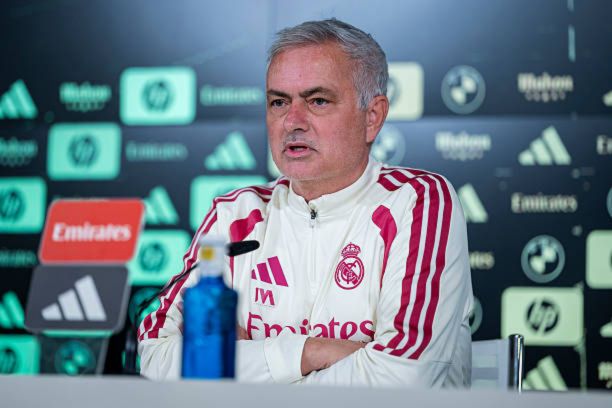
There is a particular kind of pressure that follows Mourinho into the Santiago Bernabéu. A coach can win ten matches and still be asked why the eleventh did not feel convincing. He can solve an obvious defensive problem and immediately be judged on the beauty of the attack.
That is the contradiction at the heart of this story: how could a manager known for control rebuild the freedom, confidence and ruthlessness expected of Real Madrid in just four months?
The headline is a projection, not a retrospective. As of November 23, 2026, the 2027/28 season has not begun, so nobody can responsibly claim that a four-month rescue has already happened. What follows is a plausible, evidence-informed examination of how such a turnaround might work, what an honest observer would need to measure, and why the Portuguese coach’s earlier Madrid experience still matters. This is not an invented run of fixtures dressed up as news. It is a scenario built from tactical principles, organisational choices and documented history.
The starting premise is straightforward. A club full of elite players does not automatically become an elite team. Talent needs an order of operations: when to press, when to wait, who covers the space behind an attacking full-back, and what happens three seconds after possession changes. Four months can be enough to establish those rules. Whether four months can deliver a championship is a different question altogether.
Why a Return to Madrid Changes the Expectations
The club announced Mourinho‘s appointment in June 2026 on a three-year contract through June 2029, giving the 2027/28 campaign a real organisational context even though its future events remain unknown. His second spell would inevitably be compared with the first, when his side took the league title in 2011/12 with 100 points and 121 goals. Those numbers are part of the historical record, not forecasts for the next campaign.
During his first stint, the argument around the coach was never merely whether he could teach players to defend. It was whether his competitive edge could coexist with the club’s attacking identity and internal expectations. In 2011, contemporary coverage described the painstaking attention he gave to opposing teams and individual roles. In another period, critics saw the limitations of his conservative choices against Barcelona. Both perspectives matter. To understand a potential restoration, one must consider what worked and what created friction.
Returning managers carry familiarity, but familiarity is not a shortcut. The dressing room changes, the sport evolves, and opponents learn. A successful second act would require him to keep the best parts of his methods—clear responsibility, match-specific preparation and emotional resilience—while adapting to new patterns of pressing and building from the back. Reputation might win the first press conference. It does not win the first difficult away match.
Month One: Diagnose the Team Before Changing It
For Mourinho, the first month of a hypothetical 2027/28 overhaul should begin with a diagnosis rather than a dramatic new formation. Results can hide structural defects, just as a narrow defeat can hide an encouraging performance. The technical staff would need to separate recurring problems from one-off incidents, then create a shared language for addressing them.
The review starts without the ball. How often does the front line press while midfield stays too deep? Where is the space after the first challenge is missed? Do the centre-backs step forward together, or does one retreat and leave a passing lane? In possession, the questions are different. Are defenders passing sideways because no teammate is available between lines? Do attacking players run into the same channel? Does possession actually move the opponent or simply consume time?
In this first period, supporters might see uneven performances. That would not automatically disprove the plan. The proper question is whether the same avoidable mistakes become less common from week to week. Improvement begins as a pattern before it becomes a headline.
Mournho’s Non-Negotiable Defensive Structure
Any serious account of a rapid Madrid transformation must address defensive spacing. A team that attacks with six or seven players can look irresistible while it has the ball and dangerously open the moment it loses it. The answer is not to demand that everyone remain behind the ball. It is to distribute risk intelligently.
Imagine one full-back advancing high while the other moves into a more restrained position. A midfielder screens the route to the central defenders, and the nearest attacking players react to the loss immediately. This arrangement is often described as rest defence: the structure a side maintains while attacking so that a counterattack cannot travel directly through an empty middle. Different opponents require different details, but the basic logic rarely changes.
For Real Madrid, defensive improvement would be visible in fewer clean transitions conceded, better second-ball recovery and opponents being forced into less valuable shooting areas. Clean sheets alone are too blunt a measurement: a goalkeeper can preserve a shutout despite an awful defensive display. The stronger evidence comes from chance quality, shot locations and the consistency of spacing across multiple matches.
How Mourinho Could Rebuild the Midfield Balance
For Mourinho, the midfield is where an attacking philosophy meets reality. A side can have excellent passers and still struggle to control the important parts of a match if those players are positioned at the wrong distances. A practical rebuilding job would establish who provides the first passing option, who receives between opposition lines, and who is free to arrive late into the penalty area.
Balance does not mean sacrificing creativity for another defensive midfielder in every fixture. It means creating complementary responsibilities. When the attacking midfielder moves toward the ball, another player must threaten the space behind the opponent’s midfield. When a runner vacates the centre, someone else has to secure it. The strongest partnerships make these choices instinctive rather than improvised.
This is also a coaching problem, not simply a transfer-market problem. Adding a famous midfielder cannot fix an unclear assignment. Four months may be enough to teach partnerships to read one another if the coaching staff repeats the patterns and selects combinations consistently. The key signal would be fewer passes forced under pressure and more entries into dangerous central spaces without exposing the defence.
The Counterattack: Speed With a Purpose
Memories of the 2011/12 championship side often begin with a devastating transition: a regained ball, a forward pass, and a finishing move before the opponent can reorganise. Its reputation was not accidental. The side’s astonishing goal total showed how effectively it translated possession into attacking output across a complete league season.
Yet speed should not be mistaken for hurry. A strong counterattack begins with recognition. The player winning the ball must know whether the forward lane is genuinely open. A supporting runner must offer the pass before the defensive line can reset. Another attacker may need to occupy a defender without touching the ball. If the direct route is closed, the team should retain possession and begin a settled attack instead of surrendering it cheaply.
The evidence of improvement would be qualitative as well as statistical. Are Madrid creating shots soon after regains? Are more players arriving in the box, rather than leaving the striker alone? Are counterattacks ending in chances rather than hopeful crosses? These are measurable questions. They are far more informative than the familiar claim that the team has simply rediscovered its fighting spirit.
Possession Against Teams That Refuse to Attack
Spanish league football poses a challenge that highlight reels often ignore: many opponents are happy to concede territory, slow the tempo and ask the favourite to solve a crowded penalty area. For a giant club, a tactical identity based only on counterattacking is incomplete. There must also be a patient method for turning territorial dominance into clear chances.
One solution is to create overloads on one side of the pitch and switch play quickly before the block shifts. Another is to use an inside run to pull the opposing full-back away, releasing the wide attacker into a one-on-one situation. A third is to position a midfielder between the opposition’s defence and midfield, forcing a defender to choose between stepping out and protecting the penalty area.
If the turnaround were real, the test would come in awkward fixtures, not only glamorous encounters. Can Madrid create sustained pressure against an organised side after 70 minutes? Can they protect themselves while pushing for a winner? Can substitutions introduce a new route to goal instead of adding another attacker to the same congested spaces? Those questions reveal whether the attacking plan has depth.
Month Two: Make the Dressing Room Believe the Rules
Once Mourinho has established the first month’s principles, the second has to turn them into habits. The hardest part is often not getting professional players to understand the idea. It is convincing everyone that the same standards apply when a superstar loses possession, a substitute has a bad week or a match becomes emotionally charged.
The coach would need to make selection criteria visible. A player might be picked for his ability to protect the right flank against a particular opponent. Another might start because he offers runs behind a deep line. Neither choice has to be presented as a moral judgment on the person left out. Clarity reduces the rumours that thrive when decisions appear arbitrary.
Mourinho‘s career has shown how much energy he can generate through collective identity. It has also shown that intense public messaging can create conflict if the atmosphere becomes permanently confrontational. A successful modern version should keep difficult conversations inside the training ground and reserve public attention for the team rather than individual disputes. Strong standards work better when players trust that they are being applied fairly.
Month two would ideally feature fewer obvious tactical misunderstandings and more evidence of a shared response to setbacks. After conceding a goal, does the side rush into a chaotic attack or maintain its shape? After scoring early, does it retreat unnecessarily or continue to control the match? Belief becomes credible when players demonstrate it under stress, not when they repeat it in interviews.
Set Pieces: The Quiet Shortcut to More Points
For Mourinho, not every improvement requires a philosophical revolution. Set pieces offer a practical way to improve results relatively quickly because they can be rehearsed independently from the full attacking system. A corner routine, a well-organised free-kick defence or a clearer assignment at the back post may change a tight match.
The key is specificity. Instead of repeating the same near-post delivery every week, the staff might design variants based on the opponent’s marking scheme. If the rival uses zonal marking, runners can attack the boundaries between zones. If the opponent follows players man-to-man, a block or screen—within the rules—can open a lane. On defensive corners, players must know who attacks the first ball and who guards the space for second balls.
For an ambitious four-month reset, this work matters because league campaigns are decided in narrow margins. A corner defended properly can protect a draw away from home. A coordinated free kick can break a stalemate. Those details are not glamorous, but they distinguish an organised contender from a collection of good players hoping for an individual moment.
Month Three: Adapt the Plan to Different Opponents
For Mourinho, the third month would be the point at which opponents begin reacting to Madrid’s new patterns. A move that surprised one side in August may be anticipated by October. If the coach responds by demanding the same plan more loudly, the initial gains can disappear. If he teaches the team to recognise different problems, the project becomes harder to prepare for.
An away fixture against a high-pressing opponent might call for a deeper first build-up line and more direct passes behind the full-backs. A home match against a compact low block might need an extra player between the lines and a wide overload. A lead against a strong attacking side might require calmer possession rather than endless emergency clearances.
The danger is changing too much. Players need a stable base from which to adapt. A coherent team can adjust its pressing height, full-back positioning or midfield rotation without abandoning its core spacing. If Madrid were truly improving, observers would see recognisable principles survive in very different fixtures. That is what separates a functioning tactical system from a one-off winning trick.
Managing the Biggest Matches Without Losing the League
The greatest temptation for Mourinho in Madrid is to let a famous rivalry define every decision. A victory in a high-profile contest can transform the mood overnight, but the title is normally decided by points gathered across the whole calendar. The 2011/12 championship demonstrated the power of relentless accumulation, while the 2011 Clásico sequence illustrated how quickly tactical debates can become consumed by one opponent.
A successful four-month foundation would therefore avoid treating every ordinary league match as preparation for the next marquee fixture. The coach should preserve the principles that make the team effective against most opponents and introduce special instructions only where the opponent justifies them. That could mean protecting a particular channel, changing the press around a dangerous playmaker or varying how the team builds out.
Against elite rivals, courage is not identical to all-out attack. It can mean pressing at the right moment, retaining possession when the stadium demands an immediate forward pass, or making an early substitution that addresses an emerging weakness. Equally, caution should not become a permanent invitation for pressure.
The manager would ultimately be judged both on big nights and ordinary afternoons. The hypothetical turnaround becomes believable only if improvements travel to smaller venues, difficult surfaces and frustrating situations. A side that looks disciplined under bright lights but loses its structure on a routine trip has not been fixed. It has merely produced a memorable performance.
Month Four: Turn Better Performances Into a Repeatable Standard
By the fourth month under Mourinho, the emphasis should shift from introducing new concepts to testing whether the concepts survive fatigue, injuries and rotation. Coaches cannot rely on a preferred starting eleven for every fixture. A sustainable turnaround requires substitutes to understand the same movement rules and younger players to enter matches without making the team unrecognisable.
Training sessions may become shorter and sharper as the calendar intensifies. Video analysis should focus on a limited number of high-impact clips rather than overwhelming the squad with hours of mistakes. The language of coaching ought to become simpler: protect the centre, control the second ball, recognise the pressing cue, and make the next run. The simpler those instructions sound, the more carefully they usually need to have been taught.
But four months cannot settle every question. Champions League knockout football, late-season fatigue and the weight of title pressure offer tests that autumn cannot fully replicate. A credible appraisal would describe month four as evidence of a successful foundation, not proof that every structural problem has been solved for good.
What the La Liga Table Can—and Cannot—Prove
When supporters assess Mourinho’s turnaround, they naturally open the league table. The position matters because points are the currency of a championship. Yet standings alone can disguise what has changed. A team might rise because its own performances improve, because rivals lose unexpectedly, or simply because early fixtures were easier than the later schedule.
A sound analysis of La liga standings would compare points per match over meaningful periods while acknowledging opponent quality and home-away balance. It would examine expected goals for and against, goals allowed from transition situations, shots conceded in central areas, and the number of chances created from settled possession. None of those measures should be read in isolation.
The best four-month verdict would combine both. Madrid should be earning points at a competitive rate while demonstrating tactical progress that seems repeatable. If the table improves but chance creation collapses, the turnaround may be fragile. If the underlying numbers improve but points do not arrive, the staff must investigate finishing, game management and the possibility that its model has missed something. Neither blind optimism nor a single statistic is enough.
The Role of La Liga Fixtures in the Story
To judge any claim about a four-month revival, readers need a transparent match window. The exact dates, opponents and competitions should be specified once the 2027/28 schedule and results exist. Otherwise, selecting only impressive wins would create an attractive narrative without an honest foundation.
A fair analysis of La liga matches would divide fixtures by opponent profile: high press, low block, direct transition side and strong-possession side. The purpose is not to invent labels that flatter the manager. It is to ask whether the team solved several tactical problems rather than excelling against one type. Home and away performance should also be considered separately.
For this reason, the finished historical version of this article should ultimately include an audited fixture-by-fixture appendix. At present, no 2027/28 match outcomes are claimed here. The sensible editorial decision is to explain the method now and reserve the definitive verdict until the games have actually been played.
Why Spanish Football Would Test the Rebuild
Spanish football rewards technical quality, but it also punishes teams that become predictable. Well-organised sides are capable of controlling rhythm without having the bigger budget. They can press aggressively in selected phases, defend compactly for long spells and exploit a favourite’s impatience. A manager cannot rely solely on his famous name to solve those problems.
The rhythm of Spanish La liga is therefore a useful test of adaptability. There will be periods when the leading side enjoys territorial dominance and must find the right final pass. In other games, the opponent will force a series of duels, second balls and rapid defensive transitions. At the highest level, a single poorly timed run can undo twenty minutes of control.
The broader evolution of Spanish football also makes simple nostalgia dangerous. It would be a mistake to assume that recreating a 2012 counterattacking move, player for player, would reproduce the same success. Opposition pressing schemes, positional rotations and athletic demands have changed. The old principles might remain relevant, but their execution must belong to the current squad and competition.
In this hypothetical season, the Portuguese manager’s success would depend on recognising precisely that distinction. His first Madrid team provides an important historical case study. It does not provide a prewritten blueprint for every modern opponent. Adaptation, rather than imitation, would be the true measure of his coaching.
The Psychology of a Side Expected to Win Every Week
A coach at the Bernabéu does not manage tactics in isolation. He manages expectations before and after every match. A narrow victory can be described as a warning sign, while a draw can trigger discussions about the entire direction of the club. That atmosphere affects players, staff and selection decisions whether the manager acknowledges it or not.
A rapid reset would benefit from separating internal performance standards from the mood of the latest headline. Players need to hear the same message after a convincing victory and a disappointing defeat: did we defend the agreed spaces, produce the right passing angles, and make good decisions under pressure? That consistency is easier to trust than dramatic praise followed by public criticism.
Confidence, in practical terms, is not an abstract aura. It is a winger attempting a difficult dribble because teammates are positioned to recover the ball. It is a defender stepping forward because the midfielder will cover behind him. It is a substitute understanding the role before arriving on the pitch. The psychological improvement comes from repeated evidence that the group can trust its collective structure.
Could the Same Approach Work in Europe?
A four-month domestic Mourinho improvement would attract attention across Europe, but continental success requires its own evaluation. European opponents vary widely in how they press, build possession and punish mistakes. Knockout ties also magnify isolated moments. A team can produce an excellent tactical display and still lose through a deflection, penalty or rare individual error.
The hypothetical Madrid project would need a flexible plan for defending long spells without possession and for taking initiative when the match demands it. That is a more demanding challenge than choosing between attacking and defending. It asks players to understand the score, the quality of the opponent and the risks attached to each phase of play.
There is also a scheduling issue. European travel can reduce training time during a period when the coach is still trying to install habits. The ability to rotate intelligently would therefore become part of the tactical story. A four-month turnaround that depends on the same players performing at maximum intensity every three days is unlikely to be sustainable.
The Transfer Question: Coaching Before Shopping
When Mourinho’s team has an awkward run, transfer rumours often provide a convenient explanation: recruit a defensive midfielder, purchase another centre-back, or buy a forward to solve the scoring problem. Recruitment can be essential, but it should follow a diagnosis rather than replace one.
If Madrid were regularly exposed in transition, the staff should first determine whether the issue comes from individual limitations, poor spacing or an instruction that sends too many players forward. A new signing cannot reliably fix a systematic problem that will continue to appear around him. Similarly, adding another creator will not help much if nobody runs behind the opposing defence.
The manager could still identify profiles that better suit the desired style. A full-back comfortable defending wide spaces, a midfielder who receives under pressure or a forward who attacks the far post may offer specific tactical value. The correct scouting conversation is about functions, not fame. It should explain why the role is missing and how the newcomer will fit with existing players.
The four-month story should consequently avoid attributing progress to hypothetical transfers that have not occurred. It is more intellectually useful to explore how structure might improve the output of a squad that already contains tremendous talent. Recruitment would remain a medium-term tool, while coaching, clarity and consistency would define the immediate reset.
Conclusion
The most compelling version of this story is not one in which a celebrity coach arrives and instantly makes every problem disappear. It is a story about sequence. Diagnose the recurring faults. Give players practical instructions. Build an organised structure behind the attack. Create faster and more deliberate transitions. Improve settled possession. Then prove those habits against opponents who actively try to break them.
There is strong history behind the appeal of such a narrative. The Portuguese manager once helped create a Madrid side capable of scoring at extraordinary volume while collecting 100 points in a single league season. Yet the second spell is taking place in a different football environment, and the 2027/28 campaign remains ahead of us.
If a four-month revival eventually takes shape, its most important achievement may be less spectacular than its headline. It would mean making great players function as a reliable team: one that understands its risks, recognises its opportunities and keeps its identity when the match becomes uncomfortable. That is the kind of progress worth documenting. Until the future season is played, it is a possibility to analyse—not a result to announce.
Frequently Asked Questions
Question 1: Did José Mourinho return to Real Madrid?
Ans: Yes. The club announced his appointment on June 11, 2026, and stated that his agreement would run through June 30, 2029. That verified appointment should not be confused with claims about events in the still-future 2027/28 campaign.
Question 2: Did Mourinho win La Liga during his first spell?
Ans: Yes. The 2011/12 side won the championship with 100 points and scored 121 league goals. Those are documented historical achievements and a useful benchmark for discussing his strengths, but they are not predicted totals for another season.
Question 3: Can a coach transform an elite squad in four months?
Ans: A coach can establish clear defensive spacing, attacking routines, set-piece procedures and selection standards in that period. Whether those changes constitute a complete turnaround depends on sustained evidence across matches and, ultimately, competitive results.
Question 4: Is Jose Mounrinho a different coach?
Ans: No. Jose Mounrinho is a common search misspelling of José Mourinho. The correct name should be used in editorial headlines and narrative prose; the misspelling is acknowledged here solely to help readers who arrive through that query.
Question 5: What should supporters watch first?
Ans: Watch distances between the lines, reaction to losing the ball, quality of chances against compact opponents and consistency when personnel change. These often reveal improvement before any league position tells the full story.
Image Credit: GettyImages
Read more here: How Did Mourinho Change Real Madrid?
Related Articles
Xabi Alonso at Chelsea: Too Soon to Panic? (Matchweek 4 Review)
Premier League: Top 7 Mind-Blowing Records Ever!
Bundesliga Transfer News: 10 Most Expensive Players Ever!
Top 11 Most Expensive Football Transfers in Ligue 1 History!