Great goals, invincible runs and title-winning dynasties all tell the story of Ligue 1. France’s top division has produced legendary strikers, resilient goalkeepers and unforgettable championship races since the professional national league began in 1932.
Some records were set decades ago and still seem almost impossible to beat. Others belong to the modern era, showing how quickly the game continues to evolve.
Here are 15 of the most impressive milestones in French top-flight history, from Paris Saint-Germain’s record number of titles to the youngest player ever to score. These football records are chosen for their historical importance, competitive difficulty and the fascinating stories behind them. Throughout the article, “all time” covers the continuous top-flight championship, including the years before the competition began using its current name in 2002.
Understanding those eras is important. A season played with 18 clubs cannot always be compared directly with one featuring 20 clubs, and scoring totals reflect the tactics and schedules of their time. Even so, the records below offer a rewarding tour through french football and show how individual brilliance and team discipline shape the identity of a football league.
Best 15 Ligue 1 Records of All Time!
- Paris Saint-Germain: Most French League Titles (14)
- Olympique Lyonnais: Seven Consecutive Championships (2002–2008)
- Delio Onnis: Most Career Goals (299)
- Josip Skoblar: Most Goals in One Season (44)
- Mickaël Landreau: Most First-Division Appearances (617)
- Kylian Mbappé: Six Top-Scorer Awards
- PSG: Highest Points Total in a Season (96)
- PSG: Biggest Championship Winning Margin (31 Points)
- PSG: Longest Unbeaten League Run (36 Matches)
- Nantes: Longest Unbeaten Start to a Season (32 Matches)
- Nantes: Remarkable 92-Match Home Unbeaten Sequence
- Gaëtan Huard: Longest Goalkeeping Shutout (1,176 Minutes)
- Michel Rio: Fastest Goal (Approximately Eight Seconds)
- Loïs Openda: A Hat-Trick in Four Minutes and 30 Seconds
- Richard Krawczyk: Youngest First-Division Goalscorer
1. Paris Saint-Germain: Most French League Titles (14)
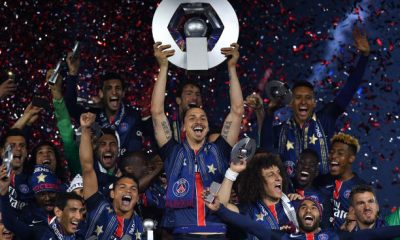
Paris Saint-Germain became the most decorated club in the history of France’s top division after securing a 14th championship in the 2025/26 season. The Parisian club moved four titles ahead of Saint-Étienne, whose ten championships had once seemed an imposing benchmark.
What makes the achievement striking is the speed of PSG’s rise. Their first championship arrived in 1985/86, followed by another in 1993/94, before an extraordinary period of success transformed the club’s place in the domestic hierarchy. This remains one of the defining achievements in Ligue 1 history.
The turnaround was not simply about collecting star names. Sustained success required a sequence of coaches, evolving playing systems, and the ability to manage the pressure that accompanies being expected to win nearly every week. Some PSG sides overwhelmed opponents through possession and attacking flair; others relied on control, pressing and the depth of their squad. That adaptability helps explain why their dominance endured across different generations.
The record also adds context to the league’s history. Saint-Étienne, Marseille, Nantes, Monaco and Lyon all enjoyed celebrated eras, but PSG set a new cumulative standard. Their 2025/26 triumph was a fifth consecutive title, adding another chapter to the story. Importantly, the figure refers to national first-division championships, not French Cup wins or European trophies. It is an ever-evolving benchmark, so the date of the count matters whenever fans compare the country’s most successful clubs.
2. Olympique Lyonnais: Seven Consecutive Championships (2002–2008)
Winning one championship is difficult; winning seven without interruption is something else entirely. Olympique Lyonnais achieved exactly that between 2001/02 and 2007/08. Their remarkable sequence remains the longest run of consecutive titles in French top-flight history.
Lyon began the streak with a dramatic final-day triumph over Lens in 2002, then proved that the first victory was the start of a genuine dynasty rather than a one-season breakthrough. This remains one of the defining achievements in Ligue 1 history.
Continuity was essential. Club president Jean-Michel Aulas provided long-term direction while managers Jacques Santini, Paul Le Guen, Gérard Houllier and Alain Perrin each contributed to the run. Players such as Juninho, Grégory Coupet and Sidney Govou formed a dependable core, and new arrivals refreshed the team whenever established stars departed. Juninho’s creativity and extraordinary free kicks became a symbol of Lyon’s technical quality.
This accomplishment is distinct from winning the most trophies overall. A club can accumulate championships over many decades, but staying first through seven successive seasons requires resilience, recruitment and motivation year after year. Lyon’s reign showed that a successful team could repeatedly reinvent itself without sacrificing standards. Even after PSG built its own era of domestic dominance, the seven-title sequence remained one of the toughest benchmarks to match.
3. Delio Onnis: Most Career Goals (299)
Delio Onnis is the all-time leading scorer in the history of the French top flight with 299 league goals. The Argentine-born striker played for Reims, Monaco, Tours and Toulon, building a remarkable career around penalty-area intelligence, timing and consistent finishing. Unlike a modern superstar whose popularity is amplified by global television coverage, Onnis earned his reputation through a sustained record of finding the net over many seasons. This remains one of the defining achievements in Ligue 1 history.
He won the league’s top-scorer award five times, a reminder that his achievement was not the product of one spectacular campaign. A reliable scorer must thrive against different defenses, survive changes in teammates and maintain sharpness as seasons accumulate. Onnis managed those challenges while representing several clubs. His tally is particularly impressive because scoring standards and tactical conditions vary widely between eras.
It is tempting to treat his total as a simple challenge for the next prolific striker, but a player must combine an exceptional scoring rate with many years in the division to reach it. Transfers abroad, injuries and changing roles frequently interrupt otherwise promising careers. Onnis therefore represents both finishing excellence and longevity. Any discussion of the greatest strikers in France must include him, regardless of whether newer stars have attracted more international attention.
4. Josip Skoblar: Most Goals in One Season (44)
In the 1970/71 season, Marseille forward Josip Skoblar scored 44 league goals, the highest single-season total in French top-division history. His astonishing return helped establish him as one of European football’s most feared finishers, and he earned the European Golden Shoe for his efforts. While modern audiences are accustomed to prolific attackers, reaching 44 goals across a domestic campaign remains an extraordinary feat. This remains one of the defining achievements in Ligue 1 history.
This was not merely a statistical curiosity from a distant era. Skoblar combined predatory movement with ruthless decision-making near goal, capitalizing on chances that other forwards would miss. He subsequently finished as the division’s leading scorer in 1971/72 and 1972/73, making his 44-goal campaign part of a broader period of sustained excellence rather than an isolated flash of brilliance.
A useful comparison is Zlatan Ibrahimović’s 38 goals for PSG in 2015/16, the highest figure since the competition adopted its current Ligue 1 branding in 2002. The distinction matters: Skoblar owns the historic French top-flight mark, whereas Ibrahimović leads the modern branded era. Both achievements belong in the conversation, but accurate statistics must specify the time frame. Skoblar’s record continues to embody the rare season in which nearly everything an elite striker attempts seems to work.
5. Mickaël Landreau: Most First-Division Appearances (617)
Goalkeeper Mickaël Landreau accumulated 617 appearances in France’s top division according to the league’s historical match-count records. His career took him to Nantes, Paris Saint-Germain, Lille and Bastia, reflecting an ability to remain relevant and trusted across multiple teams and competitive environments. The record celebrates a different kind of greatness from a spectacular goal tally: the discipline to perform regularly over an extended career. This remains one of the defining achievements in Ligue 1 history.
Goalkeepers can often play longer than outfield players, but that does not make such durability automatic. Each season brings competition for places, new tactical requirements and the risk of a single mistake dominating the headlines. Landreau navigated those pressures while maintaining the confidence of his coaches. His positional awareness, communication and consistency made him valuable even when circumstances around him changed.
Longevity records also say something about professional preparation. Remaining available through training cycles, travel and injury concerns requires outstanding habits, not merely natural talent. Jean-Luc Ettori, another celebrated goalkeeper, follows Landreau in the historical appearances ranking with 602. That goalkeepers occupy the top positions illustrates the special demands and possibilities of the position. Landreau’s benchmark rewards years of dependability that sometimes receive less attention than individual moments of brilliance.
6. Kylian Mbappé: Six Top-Scorer Awards
Kylian Mbappé won the league’s leading-scorer award six times, in every season from 2018/19 through 2023/24. No other player in the championship’s history has collected the award as often. The achievement is especially remarkable because he was still developing as a young professional when the streak began. Rather than delivering one exceptional scoring season, Mbappé sustained elite production under repeated scrutiny. This remains one of the defining achievements in Ligue 1 history.
His speed created obvious danger, but pace alone does not explain six scoring titles. Mbappé learned to vary his runs, exploit the space between defenders and finish from a wide range of positions. As opponents adjusted their plans to contain him, he continued to find new ways to influence games. This adaptability separated him from many talented forwards whose output peaks only briefly.
Before Mbappé raised the bar, Carlos Bianchi, Delio Onnis and Jean-Pierre Papin had each won five top-scorer awards. Papin’s five were consecutive, an exceptional achievement in its own right. Mbappé extended the ceiling to six, giving future attackers an unusually demanding target. The honor counts seasons in which a player finished top of the scoring chart; it is not the same record as Onnis’s career goal total or Skoblar’s most goals in a single campaign.
7. PSG: Highest Points Total in a Season (96)
Paris Saint-Germain gathered 96 points in the 2015/16 championship, a record for a 38-match French top-flight season under the three-points-for-a-win system. Their record was 30 victories, six draws and just two defeats. Those figures tell the story of a team that combined attacking brilliance with consistent results against opponents of different strengths and styles. This remains one of the defining achievements in Ligue 1 history.
The Parisian side scored 102 times and conceded only 19 goals, producing a remarkable goal difference of plus 83. Zlatan Ibrahimović led the attack, but the team’s effectiveness went beyond one player. High technical quality in midfield helped PSG control possession, and an organized defensive unit restricted opposition opportunities. They could dominate matches from the opening whistle or patiently wait for a decisive moment.
The 96-point mark is best understood with its conditions attached. League formats have changed throughout French football history, including variations in the number of teams and points awarded for a victory. Consequently, raw points from different eras are not always directly comparable. Even with that qualification, PSG’s season represents the standard for collecting points across the familiar 38-game, three-point era. It is a textbook example of how relentlessly winning ordinary league matches can become a historic accomplishment.
8. PSG: Biggest Championship Winning Margin (31 Points)
The 2015/16 PSG side did not simply finish first; it ended the season 31 points above runners-up Lyon. That gap is a record under the 38-match, three-points-for-a-win format and one of the clearest measures of domestic dominance. In many campaigns, the title race remains alive until spring or even the final weekend. In this season, the distance between the champion and its closest challenger was extraordinary. This remains one of the defining achievements in Ligue 1 history.
Such a margin does not necessarily mean every match was effortless. League competition demands focus across a long schedule, including away trips, congested periods and fixtures after European matches. PSG continued to bank points while other challengers experienced the fluctuations that normally define a season. The result was a championship decided through sustained superiority rather than a few high-profile wins.
The record is also a reminder that tables reveal more than who lifts the trophy. Goal difference, points per match and the separation from second place help describe how a title was won. PSG’s 31-point advantage captured the asymmetry of the 2015/16 season particularly well. While it overlaps with their 96-point record, the two statistics measure different things: one reflects the champions’ absolute performance, and the other their advantage over the rest of the field.
9. PSG: Longest Unbeaten League Run (36 Matches)
PSG went 36 consecutive first-division matches without defeat between March 2015 and February 2016, setting the championship’s overall unbeaten-streak record. Across the sequence, the team registered 32 victories and four draws. The run extended across two seasons, which is an important detail: it should not be confused with an unbeaten campaign achieved entirely within a single league season. This remains one of the defining achievements in Ligue 1 history.
Unbeaten sequences test a squad differently from ordinary winning streaks. A team might not play particularly well in one fixture, encounter a red card in another or face a difficult opponent away from home. Maintaining the streak requires finding ways to avoid defeat even when victory is not guaranteed. PSG repeatedly responded with the concentration and quality necessary to preserve its record.
The sequence eventually ended with a 2–1 defeat against Lyon on 28 February 2016. That result underlined how even dominant teams remain vulnerable to a strong opponent on the right day. For supporters, long unbeaten runs create anticipation as each match adds pressure to protect the sequence. For analysts, they illustrate sustained consistency rather than merely exceptional attacking output. PSG’s 36 matches remain a formidable standard in the historical record.
10. Nantes: Longest Unbeaten Start to a Season (32 Matches)
FC Nantes opened the 1994/95 league campaign with 32 matches without a loss, an astonishing single-season unbeaten run. The team ultimately won the championship with a style that remains celebrated for fluid passing, collective movement and an emphasis on understanding between players. Nantes provided evidence that cohesion and an established football identity can compete with larger budgets and more individually famous squads. This remains one of the defining achievements in Ligue 1 history.
Under coach Jean-Claude Suaudeau, their approach encouraged quick combinations and intelligent positional exchanges. The team featured players including Patrice Loko, Nicolas Ouédec and Christian Karembeu, each contributing to an attacking and energetic system. The effectiveness of the football made the unbeaten start feel like the natural product of a well-drilled collective rather than a lucky series of results.
The qualifying phrase “start to a season” is essential. PSG’s 36-game streak was longer overall, but it crossed from one season into the next. Nantes’s 32 matches came consecutively from the beginning of a single campaign. Both records are historically meaningful without being interchangeable. Nantes’s achievement remains a wonderful reference point for teams hoping to combine attractive play with exceptional regularity across an entire season.
11. Nantes: Remarkable 92-Match Home Unbeaten Sequence
Another of Nantes’s great historical achievements is a run of 92 home league matches without defeat, spanning the late 1970s and early 1980s. It is an extraordinary demonstration of the value of a formidable home ground. Travelling opponents knew that taking points from Nantes required overcoming not only a technically skilled team but also a deep-rooted confidence built through years of successful home performances. This remains one of the defining achievements in Ligue 1 history.
Home advantage in football is not simply about crowd noise. Familiar playing conditions, routines, tactical clarity and the psychological effect of repeated wins can make a venue feel particularly intimidating. Yet a run as long as 92 matches still demands constant renewal. Teams change, opponents adapt and individual players have periods of poor form. The record speaks to a club culture strong enough to survive those changes.
It is worth separating home unbeaten records from overall undefeated streaks. A side might lose several away matches while remaining almost impossible to beat in its own stadium. Nantes’s feat therefore measures a very particular form of consistency. It stands alongside the club’s 1994/95 unbeaten opening as evidence that Nantes has played a central role in some of the most memorable chapters of the French championship.
12. Gaëtan Huard: Longest Goalkeeping Shutout (1,176 Minutes)
Bordeaux goalkeeper Gaëtan Huard is credited with a sequence of 1,176 consecutive minutes without conceding a league goal in the 1992/93 campaign. Few statistics better illustrate the shared relationship between a goalkeeper and the defenders in front of him. Every match without conceding adds to the total, but one deflection, misplaced pass or exceptional opponent finish can bring the sequence to an end. This remains one of the defining achievements in Ligue 1 history.
Huard’s accomplishment reflected concentration over an unusually long period. Goalkeepers may have little to do for large stretches of a match and then be asked to produce a crucial save without warning. Maintaining a shutout across multiple fixtures means repeatedly meeting that challenge while remaining organized at set pieces and alert to counterattacks. Such consistency is difficult even for accomplished international players.
The record is not an individual clean-sheet count; it measures uninterrupted time between goals conceded while the goalkeeper is playing. It should also be distinguished from Jérémie Janot’s notable home-ground shutout sequence for Saint-Étienne. Different statistical categories tell different stories about defensive excellence. Huard’s long spell without conceding is a reminder that some of football’s most enduring achievements belong to players whose primary job is to prevent a goal rather than score one.
13. Michel Rio: Fastest Goal (Approximately Eight Seconds)
Michel Rio scored for Caen against Cannes on 15 February 1992 after approximately 7.9 seconds, a goal widely recognized as the fastest in the history of France’s first division. Most supporters barely have time to settle into their seats during the opening moments of a match. Rio had already turned the first attacking opportunity into a place in the record books. This remains one of the defining achievements in Ligue 1 history.
Ultra-early goals depend on a rare combination of awareness, execution and defensive surprise. From the initial whistle, the attacking side must move the ball forward immediately, identify an opening and deliver an accurate finish. The defending side, meanwhile, has almost no opportunity to recover from poor positioning. Such moments show why concentration has to begin before a game develops any rhythm.
When reporting the figure, it is sensible to say “approximately eight seconds” because historical accounts often round the precise timing. What matters is the exceptional immediacy of the strike. The record is different from the fastest goal by a substitute or the quickest goal scored in a particular season. Rio’s moment demonstrates that football history can be made in the smallest possible window, even by a player who is not a globally recognized superstar.
14. Loïs Openda: A Hat-Trick in Four Minutes and 30 Seconds
Loïs Openda produced one of the most explosive individual scoring bursts in recent French league history when he completed a hat-trick in four minutes and 30 seconds for Lens against Clermont in March 2023. Lens won the away fixture 4–0, and Openda’s remarkable sequence helped the club build momentum in a season that ended with a second-place finish. This remains one of the defining achievements in Ligue 1 history.
Unlike a hat-trick spread across ninety minutes, three goals in such a narrow period change the emotional shape of a match almost immediately. The opposition has little time to reorganize before another attack begins, and the scorer enters a rhythm that feels impossible to interrupt. Openda’s finishing, movement and acceleration were all on display as Lens exploited the openings in front of them.
The French league has described the performance as its fastest hat-trick in the previous 50 years, rather than claiming it is definitively the fastest across every season since 1932. That qualification keeps the achievement accurate while taking nothing away from its brilliance. Openda’s burst surpassed the modern comparison with Matt Moussilou’s rapid hat-trick for Lille in 2005. It also reveals the sudden drama that makes league football compelling: a match can be transformed in less than five minutes.
15. Richard Krawczyk: Youngest First-Division Goalscorer
Richard Krawczyk holds the historical distinction of being the youngest goalscorer in France’s top division. The Lens player found the net against Angers in September 1963 at just 16 years, three months and 15 days old.
His record demonstrates that, even long before modern youth development became a global industry, an exceptional teenager could make an immediate impression at senior level. This remains one of the defining achievements in Ligue 1 history.
Scoring as a young professional is very different from standing out in academy football. A teenage attacker must contend with physically mature defenders, intense crowd expectations and the speed of senior decision-making.
Creating or taking one chance in those circumstances requires composure as well as talent. Krawczyk delivered his defining moment at an age when many promising prospects are still learning the fundamentals of professional competition.
Youngest-goalscorer rankings are particularly vulnerable to confusion because reports may switch between first-team debuts, goals in all competitions and goals specifically in league play. Exact ages also matter when several players are separated by only weeks. The league’s historical list identifies Krawczyk at the top, making him a standout in the long story of emerging talent. His mark offers a reminder that football’s next generation has always been capable of making history early.
Why These Records Matter
A record is a useful starting point for understanding greatness, but the surrounding story gives it meaning. A striker’s 44-goal season reflects attacking brilliance; a goalkeeper’s uninterrupted shutout demands patience, organization and trust.
A club that wins seven championships consecutively shows a different skill from a side that gathers the highest points total in a single season. The variety is what makes historical comparisons so rewarding.
These achievements also connect generations of football players. Supporters who never watched Delio Onnis or Josip Skoblar can still appreciate the scale of their accomplishments by comparing them with modern scoring benchmarks. The same applies to football teams: a younger fan may associate domination with PSG, while the figures reveal the extraordinary eras of Lyon and Nantes.
The lesson is to use precise categories and dates. All-time goals, goals in one season, appearances, successive championships and unbeaten matches are different measurements. Context allows the reader to celebrate each achievement without stretching it into an inaccurate claim. When viewed together, the numbers form a richer picture of the game in France.
Conclusion
The greatest records in the French first division offer far more than trivia. They preserve the moments when outstanding individuals and cohesive squads pushed the boundaries of what seemed possible. From Onnis’s remarkable career tally and Skoblar’s stunning scoring season to Lyon’s dynasty and PSG’s rise, each milestone illuminates a different dimension of excellence.
For fans researching football records, the best approach is to enjoy the drama while checking dates, formats and categories. That is how the history of french football stays both exciting and accurate. It also makes comparisons between different football players and football teams more meaningful, whether the discussion concerns an elite scorer, an unbreakable home record or the legacy of a dominant football league.
Read more here: Ligue 1 History and Records
Frequently Asked Questions
Question 1: Which club has won the most French top-flight titles?
Ans: Paris Saint-Germain leads with 14 championships following its 2025/26 triumph. Saint-Étienne is next with ten. The count refers to titles in the national first division, not all domestic trophies.
Question 2: Who is the all-time leading goalscorer?
Ans: Delio Onnis leads with 299 first-division goals. His lengthy career across several French clubs is a benchmark of reliability and finishing ability.
Question 3: Who has scored the most goals in a single season?
Ans: Marseille’s Josip Skoblar scored 44 in 1970/71. For the era since the Ligue 1 name was adopted in 2002, Zlatan Ibrahimović’s 38 goals in 2015/16 are the standout modern benchmark.
Question 4: Which club has won the most consecutive championships?
Ans: Lyon holds the mark with seven straight titles from 2001/02 to 2007/08, achieved through an extraordinary era of continuity and squad development.
Question 5: What is the difference between an unbeaten season run and an overall unbeaten streak?
Ans: A single-season run takes place within one campaign. An overall streak can span two seasons. Nantes began 1994/95 with 32 matches undefeated; PSG produced an overall streak of 36 across 2014/15 and 2015/16.
Image Credit: GettyImages
Related Articles
Xabi Alonso at Chelsea: Too Soon to Panic? (Matchweek 4 Review)
Premier League: Top 7 Mind-Blowing Records Ever!
Bundesliga Transfer News: 10 Most Expensive Players Ever!
Top 11 Most Expensive Football Transfers in Ligue 1 History!