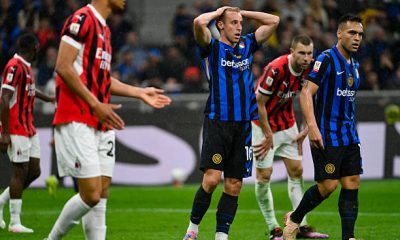
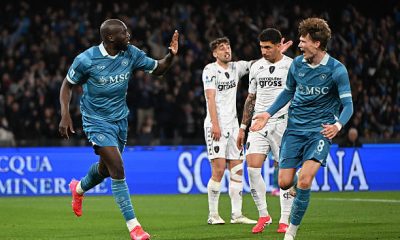
A spectacular unveiling does not guarantee a happy ending. Across the last decade, Serie A clubs have spent heavily on prospects, established internationals and supposedly perfect tactical fits, only to find that a name on a team sheet is not the same as value on the pitch.
These ten deals stand out for the gap between cost and contribution, the speed of an exit, or the opportunities their clubs lost while waiting for a signing to click. The verdict concerns the transfer at the buying club—not the player’s entire career.
This is an editorial ranking, not an official league statistic. The period covers arrivals from summer 2016 through summer 2026, with outcomes assessed using information available by September 2026.
Fees are reported or officially announced starting amounts, not inflation-adjusted prices; loans, add-ons and player-exchange accounting complicate simple comparisons. Injury and coaching context matter, and a subsequent revival elsewhere does not erase either the ability of the player or the disappointment of the original deal.
How the ten transfers were assessed
In Serie A, a headline fee is only one part of the story. The test is not merely whether somebody scored enough goals. We weighed the initial investment, the intended role, the actual contribution at the purchasing club, the durability of that contribution and the eventual exit.
For a creator, that means influence and trust; for a striker, reliable scoring and a clear place in the attack; for a central midfielder, consistent control and availability. Free transfers can still be expensive when wages, signing costs and squad space are included.
The exercise is also deliberately narrower than a list of disappointing careers. Players who performed respectably for years despite an expensive fee are not automatically flops. Conversely, a footballer can become excellent at another club while still representing a painful recruitment error for the side that bought him.
That distinction makes this a useful look at how Italian football clubs scout, price, integrate and sometimes misjudge talent.
Top 10 Worst Serie A Transfer Flops of the Decade!
- Arthur Melo (€72m plus up to €10m add-ons)
- Gabriel Barbosa (€29.5m)
- Douglas Luiz (€50m)
- Charles De Ketelaere (€35m)
- Aaron Ramsey (Free transfer; substantial salary commitment)
- Javier Pastore (€24.7m)
- Patrik Schick (€42m)
- André Silva (€38m)
- Nikola Kalinić (€25m loan-and-purchase package)
- João Mário (€40m)
10. João Mário
When Inter signed João Mário from Sporting in 2016, they were buying a freshly crowned European champion and a midfielder expected to bring calm and craft to a side that wanted to return to the top. The reported fee of about €40 million suggested a cornerstone rather than a disposable experiment.
He had the technique to circulate possession and the experience to play in several positions, but the club was asking him to make a difficult transition while the surrounding project kept changing.
His Inter spell was not devoid of good matches. The problem was that isolated flashes never developed into the consistent authority the outlay implied. Different coaches used him at varying heights in midfield and the team lacked a settled framework in which he could impose himself.
A player valued for intelligence and rhythm became a symbol of a recruitment plan that looked more convincing on paper than in practice. This was a mismatch of expectations as much as a shortage of ability.
Loan spells at West Ham, Lokomotiv Moscow and Sporting helped him find playing time elsewhere. Inter ultimately announced that his contract had been terminated by mutual consent in July 2021. For a sizable purchase, that was an unambiguously disappointing endpoint.
He subsequently found success away from Milan, which is precisely why the distinction matters: this list judges Inter’s investment, not the totality of his footballing talent.
His case illustrates the hidden cost of recruitment without a stable role. Midfielders who perform best with clear passing angles, defined responsibilities and a compatible partner can look ordinary when asked to solve every tactical issue themselves. Inter bought a useful player but never extracted the reliable, high-value contribution that made the original price feel justified.
For Serie A observers, the important detail is not that João Mário lacked technique but that his value never became central to Inter’s long-term midfield design. The lessons remain relevant whenever a club spends for pedigree before defining the player’s place in the side.
9. Nikola Kalinić
AC Milan’s aggressive 2017 rebuild required immediate goals. Kalinić arrived from Fiorentina on a loan arrangement tied to a purchase, widely reported as a package of roughly €25 million. He knew the league, could occupy centre-backs and had been productive in Florence. Unlike a teenage prospect, he was signed to offer an established option while a heavily revised squad found its feet.
The contrast between the idea and the reality became stark. Milan struggled to establish attacking patterns and Kalinić struggled to translate his previous form into dependable finishing. His six league goals in 2017–18 were not the return that a club seeking a Champions League place had planned around.
His movement and hold-up play could contribute, yet a first-choice striker at a large club is measured partly by whether the chances are converted when a match hangs in the balance.
It would be unfair to pretend that one forward created Milan’s wider problems. The squad had been changed quickly, service varied and the pressure of an expensive summer weighed on several recruits. But those explanations cannot turn a short-lived, costly move into a success. Atlético Madrid signed him in 2018, making Milan’s search for a lasting centre-forward feel as though it had barely begun.
Kalinić’s inclusion is a reminder that familiarity with a league does not guarantee a smooth move within it. A striker’s shot locations, attacking partners and the types of crosses he receives can change dramatically from one team to another. Milan acquired experience; what they needed was repeatable output in their own system.
In Serie A, a familiar striker can still face an unfamiliar attacking job. Kalinić’s disappointing return shows how service, confidence and positional instructions matter even for a player who has already demonstrated that he can score in the competition.
8. André Silva
André Silva arrived from Porto in 2017 as one of the headline names of Milan’s spending spree. A reported €38 million fee reflected belief in a young Portugal international with technique, movement and room to grow. There was an appealing logic to the deal: a club building for the future could secure its striker before he reached his peak and develop an attacking identity around him.
The first season provided a more complicated story. He scored in European competition but managed only two goals in the Italian league. That distinction is important: describing him as incapable of scoring anywhere would misrepresent his campaign.
The problem was that his domestic return, in the competition where Milan needed weekly progress, fell far short of the expected contribution. Minutes, selection changes and a difficult collective season further interrupted his rhythm.
Milan sent him on loan to Sevilla in 2018. He later rediscovered his scoring touch in Germany, most notably with Eintracht Frankfurt, reinforcing the argument that environment and timing can be as decisive as raw ability. It also sharpened the disappointment of the original deal: the talent had been real, yet Milan had not found the conditions to make it productive.
This transfer captures the risk of assigning an enormous fee to potential while expecting immediate certainty. Developing forwards need continuity, but ambitious clubs often cannot afford a season of trial and error. Silva was neither a fraud nor a lost cause. He was an expensive answer to a question Milan could not solve with the team they had assembled.
The Serie A campaign was the arena in which André Silva most needed to deliver, and his two league goals explain the disappointment more clearly than broad criticisms of his character or ability. His German revival supplies the essential context for a fair assessment.
7. Patrik Schick
Roma brought Patrik Schick from Sampdoria in 2017 after a breakout season that made him one of Europe’s most discussed young forwards.
The deal could reach approximately €42 million under its reported terms, an extraordinary commitment for a club hoping to pair future upside with immediate attacking flexibility. He could play centrally or drift into space from the right, giving Roma the outline of a modern, versatile goal threat.
In practice, the fit proved awkward. Edin Džeko occupied the centre-forward role and Schick was frequently asked to operate away from the areas in which his instincts were strongest. Injury disruption and the burden of an enormous fee did little to help.
His league scoring return over two campaigns was thin relative to the investment, and many appearances felt like attempts to discover what his role should be rather than evidence of a settled plan.
The clearest twist came after his departure. A loan to RB Leipzig led into a move to Bayer Leverkusen, where he demonstrated that the finishing talent Roma had identified was genuine. That later success should change the way his Roman spell is explained: it was a recruitment and deployment failure, not proof that the player lacked top-level ability.
For clubs following football transfer news, Schick remains an instructive example of buying a star prospect without a vacancy in his best position.
Adding a costly forward behind an established focal point can leave both tactical choices and development minutes compromised. A transfer can be strategically flawed even when the scouting report on the footballer was largely correct.
A Serie A transfer cannot be judged only by the size of the future upside. Schick’s price assumed that Roma could turn potential into meaningful minutes. Once the central attacking role remained occupied, the recruitment model became harder to defend.
6. Javier Pastore
Javier Pastore arrived in Rome from Paris Saint-Germain in 2018 for a reported €24.7 million. At his best, he had the soft touch, disguise and passing range to unlock packed defences. The attraction was obvious: Roma wanted more imagination after losing influential midfield quality, and Pastore offered the kind of artistry that could make an attack feel unpredictable.
The concern was equally obvious. An attacking midfielder must be available often enough to develop combinations, and Pastore’s spell became defined by interrupted fitness. His moments of invention never added up to a durable presence in the side. Roma could glimpse the player they thought they had purchased, but struggled to build around him from one month to the next.
That is why the fee cannot be judged simply by an isolated highlight reel. A team investing significant money in a creative leader needs a reliable platform: starts, passing chemistry with the forwards and enough consecutive matches to dictate patterns. Pastore’s injuries reduced the opportunity for all three. By the time his Roma contract ended in 2021, the original plan had not been realised.
There is a human limit to the word flop. Injury is not a moral failure and no player chooses prolonged rehabilitation. The criticism belongs chiefly to the sporting outcome and to the risk assumptions that accompanied the deal. Pastore’s story is about what happens when a club purchases peak-level artistry but cannot secure peak-level availability.
At Serie A level, the availability of a creative midfielder is part of the creative contribution itself. Roma bought the possibility of decisive performances, but the fragmented run of appearances meant the imagined partnerships never had time to mature.
5. Aaron Ramsey
Juventus signed Aaron Ramsey after his Arsenal contract ended in 2019, continuing a strategy of recruiting high-profile players without paying a traditional transfer fee. His Premier League experience, forward runs from midfield and ability to arrive in the box looked valuable. A free transfer also appeared to offer room for profit or a relatively painless exit if things failed to work.
But a zero transfer fee is not a zero-cost decision. Salary commitments, signing costs, roster space and the opportunity to recruit someone else all affect the calculation. Ramsey had useful spells and collected honours in Turin, so describing his time as a complete absence of contribution would be misleading. The issue was the limited sustained impact relative to the scale of the contract and the expectations attached to his arrival.
Fitness interruptions and changing midfield structures made it difficult for him to establish a regular rhythm. The more Juventus required dynamism, durability and a reliable partnership in the middle of the pitch, the less the original calculation seemed to work. A loan to Rangers in 2022 was followed by the termination of his Juventus contract that summer.
Ramsey belongs on this list because transfer value cannot be understood from a headline fee alone. Some bargain-looking acquisitions prove expensive when measured against seasons of output. This is not a dismissal of his Arsenal career or his technical qualities. It is a lesson in measuring every major signing by total commitment and role-specific value rather than the comforting phrase free transfer.
This Serie A move also demonstrates why a financially attractive announcement is not the same thing as a low-risk contract. The opportunity cost of an expensive squad place can persist long after a player’s early promise has faded.
4. Charles De Ketelaere
The excitement surrounding Charles De Ketelaere in 2022 was rooted in good reasons. He was a young Belgian creator with an unusual blend of height, close control and intelligence, and Milan reportedly committed roughly €35 million to bring him from Club Brugge. The defending champions wanted more variety between the lines, and this looked like the sort of signing that could develop alongside the rest of a young core.
His first season was exceptionally difficult. The obvious number was zero league goals, but the wider problem was a persistent lack of fluency and confidence in the final third. He struggled to establish himself as Milan’s creative reference point and became increasingly associated with what the team was missing rather than what he could provide. For a prized attacking signing, the gap between promise and production was impossible to ignore.
Then came the counterargument to every simplistic flop label. Milan loaned him to Atalanta in August 2023, and the Bergamo club made the move permanent in June 2024. Under a different coaching and tactical environment, his strengths became far easier to recognise. That revival does not retroactively produce goals for Milan, but it does make the lesson more interesting than a blunt claim that scouts chose the wrong footballer.
His story says as much about integration as acquisition. A club can identify an excellent talent yet misuse the development period in which that talent needs clear instructions and patience. In a decade of Serie A market mistakes, this is one of the clearest cases of a failed club-player fit rather than a failed player.
The Serie A revival at Atalanta is not a contradiction of Milan’s disappointment. It is the strongest evidence that the same player can produce radically different returns when his functions, confidence and collective environment change.
3. Douglas Luiz
Douglas Luiz had become a central figure for Aston Villa before Juventus signed him in 2024. The official agreement valued his acquisition at €50 million, a major outlay for a midfielder expected to supply composure, distribution and competitive presence. His Premier League form encouraged the view that Juventus were buying a player ready to improve the team immediately rather than someone who needed several years of development.
The season went badly. Injuries and tactical uncertainty made it hard for Luiz to secure the consistent starting role implied by the investment. Juventus’ own account of his first campaign records 27 appearances in all competitions, including 19 in the league. Those totals do not by themselves measure performance, but they underline how little sustained influence the club received from a signing presented as a major midfield solution.
In August 2025, Juventus announced his loan to Nottingham Forest with a purchase obligation attached under the agreement. That early exit made the contrast particularly stark: a club had committed a premium fee and then sought another home for the player after a single season. The terms of later moves should not be simplified into a guaranteed realised loss, yet the on-pitch outcome of the original purchase was already disappointing.
The transfer offers a caution about importing form without importing context. Villa’s structure, responsibilities and confidence in Luiz had been built over years. Juventus needed an instant pillar inside a different midfield. Even a proven performer may need time, trust and compatible partners. When a deal is expensive, patience can become the first casualty of a poor opening campaign.
For Serie A recruitment departments, Luiz’s transfer raises a deceptively basic question: is the club purchasing the midfielder’s talent or the system that previously helped him express it? Only the first can actually travel with the player.
2. Gabriel Barbosa
Inter signed Gabriel Barbosa from Santos in 2016 amid huge anticipation. Known widely as Gabigol, the Brazilian forward carried the aura of a future star, and the fee was widely reported at around €29.5 million. He had already shown scoring instincts and confidence at home. Supporters understandably imagined a new attacking attraction rather than a player who would spend much of his first season on the margins.
The defining image of his Inter career is almost cruelly small: his winner away to Bologna in February 2017. It was an important goal and an excellent moment for player and club. Inter’s own match account records the decisive late finish. Yet it remained his only league goal for the Nerazzurri, and opportunities were scarce. For a forward signed with such fanfare, the lack of minutes and sustained connection with the team was the central disappointment.
Inter loaned him to Benfica in August 2017, a surprisingly rapid retreat from the original plan. Later success in Brazil demonstrated that the talent and goalscoring personality had not vanished. The club simply never converted the signing into a meaningful part of its attack. A brief European stint can be a poor measure of an individual’s overall quality, but it can be a very revealing measure of a club’s recruitment strategy.
This is one of the strongest examples of hype outrunning a credible integration plan. A young forward moving continent needs adaptation, clear communication and a real pathway to competitive minutes. Inter made the marquee purchase; the subsequent campaign never provided the environment to justify it. The transfer became memorable less for what happened on the pitch than for how little happened at all.
The Serie A record at Inter tells an unusually compact story: one winning goal, little opportunity and an exit on loan. The wider career tells a different one. Responsible retrospectives leave room for both truths.
1. Arthur Melo
Juventus’ 2020 acquisition of Arthur from Barcelona sits at the top because of the combination of headline value, sporting expectations and the peculiar structure of the transaction. The club officially announced a €72 million purchase, with up to €10 million in additional conditions, while Miralem Pjanić moved the other way in a separately valued €60 million deal. It is therefore misleading to describe the full Arthur figure as a straightforward net cash payment divorced from the exchange.
The attraction was understandable. Arthur had a reputation as a close-control midfielder who could receive under pressure and recycle possession. Juventus wanted a new engine for its central areas and could imagine him replacing some of the technical security lost with Pjanić. But possession safety alone was not enough. The team needed line-breaking passes, tempo changes and a midfielder who could assert himself across different phases of play.
Arthur never became that indispensable organiser. His spells in Turin were disrupted and increasingly peripheral, while later loans underlined the separation between the original ambition and the footballing outcome. He could contribute in certain contexts, but Juventus had paid a premium valuation for a cornerstone. The contrast between the figure in the announcement and the player’s actual influence is what makes the deal so conspicuous.
The exchange structure also offers a broader lesson about evaluating transfers. Accounting gains and sporting value are not identical, and a transaction that produces a favourable short-term bookkeeping effect can still leave a team less effective on the field. Arthur’s case combines the risks of player valuation, tactical fit and squad succession in one deal. It is the most compelling illustration here of why transfer-market success cannot be read from the announcement alone.
In Serie A transfer history, the Arthur transaction stands out because the published valuation and the simultaneous Pjanić agreement must be read together. The headline number is real, but the cash-flow and accounting story is more complex than a normal purchase.
What these mistakes reveal about recruitment
Across Serie A, a striking feature of the list is that almost none of the players arrived without a credible footballing case. They had international experience, strong previous seasons or traits that would improve many teams. The recurring failure was translating that case into the specific demands of the buying club. A midfielder cannot create a coherent midfield by himself; a striker cannot finish chances a system does not generate; a developing playmaker cannot thrive on reputation alone.
The second pattern is impatience magnified by cost. When a fee dominates transfer news, every missed chance becomes a referendum on a transfer rather than one moment in a long season. Pressure can harden selection choices and encourage another purchase before the first one has been fully integrated. The cycle is particularly damaging when the underlying recruitment question—what role must this player perform?—was never answered clearly.
Third, value is more than the sticker price. A loan obligation may spread payment, bonuses may never become due, a player exchange may inflate two announced figures, and a free agent may carry a substantial wage burden. Comparing only fees creates a distorted table. Better football transfer news analysis asks what the club committed, what it received, and whether the deal blocked other choices.
Finally, a career rebound elsewhere can coexist with a genuinely unsuccessful original transfer. Schick, André Silva and De Ketelaere each provide versions of that story. Evaluating the club’s decision without attacking the player makes a retrospective more accurate and more useful. The interesting question is not whether supporters were right to laugh at a signing; it is how a talented professional and a supposedly sensible investment became such a poor match.
The next time a club dominates transfer news with a spectacular announcement, the better questions are practical. Who loses minutes? Which attacking patterns suit the newcomer? How much of the cost is fixed, and what would count as a successful first season? Those answers often tell readers more than a highlight compilation.
One reason Italian football produces such fascinating transfer stories is the tactical variety between clubs. A role that is natural for a player in one setup may be almost absent in another. Recruitment teams need to assess both the individual and the football he will be asked to play.
Readers checking transfer news today should remember that an early judgment is provisional. A disappointing debut year may become a productive second season, and a loan can offer the platform for a recovery. This ranking relies on established outcomes at the purchasing club rather than predicting the fate of new arrivals.
The wider Serie A lesson is that fees attract attention, but planning produces value. A coherent squad can make a modest transfer transformative; an incoherent one can make an international star appear peripheral. The most useful analysis begins with that difference.
Wrapping Up
The biggest Serie A transfer flops are not simply the players with the lowest goal totals. They are the costly decisions that fail to deliver the role, continuity and value a club thought it was buying.
Arthur’s exchange valuation, Gabigol’s near-invisible Inter spell and Douglas Luiz’s swift departure are different kinds of miscalculation, but all reveal how quickly promise can separate from performance. For fans following transfer news today, the lesson is to look beyond the unveiling and ask how a signing will actually fit, play and grow.
Image Credit: GettyImages
Read more: Costly Flop Signings in Serie A!
Frequently Asked Questions (FAQs)
Question 1: Who is considered the biggest Serie A transfer flop of the decade?
Ans: Arthur Melo is frequently mentioned among the biggest Serie A transfer flops of the decade. Juventus signed the Brazilian midfielder from Barcelona in 2020 in a deal valued at approximately €72 million, excluding potential bonuses. Despite his reputation for technical ability and ball retention, Arthur struggled with injuries, inconsistent performances, and limited influence in midfield. His inability to justify the financial investment made the transfer one of Juventus’ most disappointing deals in recent history.
Question 2: Why do expensive players fail in Serie A?
Ans: Expensive players can struggle in Serie A because of tactical differences, defensive organisation, physical demands, injuries, and difficulties adapting to a new environment. Italian clubs often expect players to understand complex tactical systems and contribute defensively. Even talented footballers can struggle when their playing style does not suit their manager’s approach. High transfer fees and wages also increase expectations, making disappointing performances more noticeable.
Question 3: Was Cristiano Ronaldo a transfer flop at Juventus?
Ans: No, Cristiano Ronaldo is generally not considered a transfer flop at Juventus based on his individual performances. The Portuguese forward scored 101 goals in 134 league appearances and helped Juventus win two Serie A titles. Although the club failed to achieve its primary ambition of winning the Champions League during his time in Turin, Ronaldo delivered impressive individual statistics. His transfer remains a subject of debate because of its financial implications rather than a lack of goals or individual contributions.
Question 4: Which Serie A club has made the most disappointing transfers in the last decade?
Ans: Juventus, AC Milan, and Inter Milan have all experienced expensive transfer disappointments over the past decade. Juventus faced criticism over deals involving Arthur Melo and Aaron Ramsey, while AC Milan struggled to get the expected returns from players such as André Silva and Charles De Ketelaere during their respective spells at the club. Inter Milan also experienced a disappointing transfer with João Mário, who failed to establish himself as a consistent performer following his expensive arrival from Sporting CP.
Question 5: Can a player recover from being labelled a Serie A transfer flop?
Ans: Yes, a disappointing transfer does not necessarily define a player’s entire career. Charles De Ketelaere is a notable example. After struggling to make an impact at AC Milan following his €35 million move from Club Brugge in 2022, the Belgian rediscovered his form at Atalanta. His improvement demonstrated how a different tactical system, greater confidence, and consistent playing time can transform a player’s career. A footballer who fails at one club may become an important performer elsewhere when the conditions better suit his abilities.
Related Articles
Xabi Alonso at Chelsea: Too Soon to Panic? (Matchweek 4 Review)
Premier League: Top 7 Mind-Blowing Records Ever!
Bundesliga Transfer News: 10 Most Expensive Players Ever!
Top 11 Most Expensive Football Transfers in Ligue 1 History!