Few sporting events carry the pressure, history and global attention of a World Cup final. For 90 minutes, or sometimes much longer, everything comes down to one game.
The greatest World Cup finals have given football fans extraordinary comebacks, controversial goals, penalty shootouts, individual brilliance and moments that have become part of sporting history.
Since the first FIFA World Cup in 1930, the final has produced everything from dominant performances to matches decided by the narrowest possible margin.
Some finals are remembered for the quality of football, others for their drama, and a select few manage to deliver both. FIFA itself has highlighted many of these games among the finals that made tournament history.
This ranking considers the drama of the game, the quality of the teams, iconic moments, historical importance, individual performances and how memorable the match remains years later.
In other words, the best FIFA World Cup finals are not necessarily the games with the most goals. They are the finals that made people feel that something extraordinary was happening.
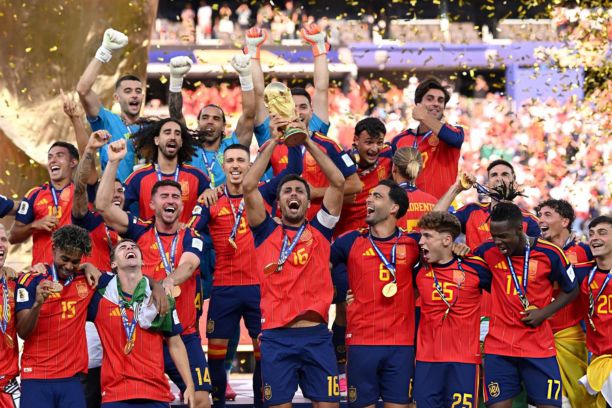
One important update is worth mentioning. The FIFA World Cup 2026 has now been completed, with Spain defeating Argentina 1-0 after extra time in the final on 19 July 2026.
It was a major historical occasion and Spain’s second world title, but the match does not quite make this top 10 when measured against the drama and unforgettable twists of the classics below.
So, beginning at number 10 and working all the way to the greatest final ever played, here are our picks.
10. France 4-2 Croatia – 2018
The 2018 final deserves its place among the greatest World Cup finals for one obvious reason: entertainment. Six goals in a World Cup final is rare enough, but this game also featured an own goal, a penalty, a goalkeeper mistake and goals from some of the tournament’s biggest stars.
Croatia had been one of the stories of the competition. Luka Modrić and his teammates had survived three consecutive knockout games that went to extra time, beating Denmark and Russia on penalties before overcoming England in the semi-final.
France, meanwhile, had progressed with greater control and possessed a squad loaded with pace, physical strength and technical quality. The final immediately delivered drama. Mario Mandžukić accidentally headed Antoine Griezmann’s free kick into his own goal, putting France ahead.
Ivan Perišić responded with a superb equaliser, but France regained the lead through Griezmann’s penalty before half-time.
Then came the decisive period. Paul Pogba made it 3-1 before Kylian Mbappé scored France’s fourth. At only 19 years old, Mbappé underlined why he was already regarded as one of the world’s most exciting young football players. Mandžukić later capitalised on Hugo Lloris’ error to reduce the deficit, but France had done enough.
FIFA records the final as a 4-2 France victory, with goals credited to Mandžukić’s own goal, Griezmann, Pogba and Mbappé for France and Perišić and Mandžukić for Croatia.
The match lacked the late uncertainty of some higher-ranked games on this list, but as a spectacle it delivered almost everything viewers could ask for.
Croatia attacked bravely, France were ruthless when opportunities appeared, and six goals ensured the game never became a cautious tactical stalemate.
France lifted their second world title, while Croatia left Moscow with their reputation transformed.
Modrić won the tournament’s Golden Ball, and a generation of Croatian players had taken a nation of fewer than five million people to football’s biggest game.
9. Germany 1-0 Argentina – 2014
Not every classic requires a huge scoreline. Germany’s victory over Argentina in 2014 was one of those World Cup finals where tension grew with every passing minute.
Germany entered the final after producing one of the most astonishing performances in tournament history: a 7-1 semi-final demolition of hosts Brazil. Argentina reached the final after beating the Netherlands on penalties and were led, naturally, by Lionel Messi.
Despite Germany’s reputation for fluid attacking football throughout the tournament, Argentina created some of the better opportunities in the final.
Gonzalo Higuaín was presented with an enormous chance following a defensive mistake but dragged his effort wide. He later put the ball into the net only for the goal to be correctly ruled out for offside.
Messi also had openings, while Germany remained patient rather than panicked. After 90 minutes, the game remained goalless.
With penalties appearing increasingly likely, André Schürrle attacked down the left in the 113th minute and delivered a cross towards Mario Götze. The substitute controlled the ball on his chest and volleyed it beyond Sergio Romero in one fluid movement.
It was a goal worthy of winning the tournament. FIFA’s records identify Götze’s 113th-minute strike as the only goal in Germany’s 1-0 victory over Argentina.
The match ranks below some more chaotic finals because there were relatively few goals, but the suspense was enormous. One mistake, one piece of brilliance or one successful counterattack could have decided everything.
Germany’s victory also carried broader significance. Joachim Löw’s squad became world champions after years of restructuring German football and repeated deep runs in major tournaments.
For Messi, it was the closest he had yet come to winning football’s biggest prize. Eight years later, he would return to the final, and become the central figure in the game that eventually tops this ranking.
8. Argentina 3-1 Netherlands – 1978
Few World Cup finals have carried an atmosphere quite like Argentina against the Netherlands in Buenos Aires in 1978.
Argentina were playing at home, attempting to win the competition for the first time. The Netherlands, despite the absence of Johan Cruyff from the tournament, had returned to the final four years after losing to West Germany in 1974.
Mario Kempes became the defining player of the match. The Argentine forward opened the scoring in the first half, but the Netherlands refused to disappear. With eight minutes remaining, substitute Dick Nanninga headed in the equaliser.
Then came one of the great “what if?” moments in World Cup history. Deep into normal time, Rob Rensenbrink connected with a ball at the far post and saw his effort strike the post. Had the ball travelled a few centimetres differently, the Netherlands might have become world champions.
Instead, the match went to extra time. Kempes struck again, forcing his way through the Dutch defence before eventually getting the ball over the line. Daniel Bertoni then added Argentina’s third, completing a 3-1 victory.
FIFA’s historical records confirm Argentina’s 3-1 extra-time win and Kempes’ central role in the country’s first world title. What elevates this final is how narrow the difference between triumph and defeat really was. The Netherlands were seconds and inches away from potentially winning the tournament, only for Argentina to dominate the decisive period.
Kempes finished the competition as its leading scorer and became an enduring symbol of Argentina’s first championship. For the Dutch, it meant consecutive final defeats. They would eventually reach another final in 2010, but once again finish runners-up.
7. Uruguay 4-2 Argentina – 1930
The first final in World Cup history remains one of the most fascinating World Cup finals ever played. There was no decades-long tradition behind the competition in 1930. Nobody knew what the World Cup would eventually become. Uruguay and Argentina were simply two outstanding South American rivals competing to become the first world champions.
Even the match ball became part of the story. FIFA has documented how Argentina and Uruguay had disagreements about which team’s ball would be used, eventually resulting in different balls being used in the two halves.
Uruguay opened the scoring through Pablo Dorado, but Argentina responded strongly. Carlos Peucelle equalised before Guillermo Stábile gave Argentina a 2-1 lead.
At half-time, the visitors were ahead. Uruguay then completely changed the contest. Pedro Cea equalised before Santos Iriarte put the hosts 3-2 ahead. Héctor Castro added another late goal to complete a 4-2 victory and crown Uruguay the first world champions.
FIFA’s historical records list Dorado, Cea, Iriarte and Castro as Uruguay’s goalscorers in the 4-2 victory at the Estadio Centenario. What makes the game remarkable today is how many ingredients associated with modern World Cup drama were already present at the very beginning: rivalry, a comeback, six goals, a passionate home crowd and enormous national pride.
The famous World Cup match also established Uruguay as an early superpower of international football. They had already won Olympic football gold in 1924 and 1928, and victory in 1930 confirmed their position at the top of the sport. Almost a century later, the first final still belongs among the best.
6. Italy 1-1 France – Italy won 5-3 on penalties – 2006
Mention the 2006 final and one image immediately comes to mind. Zinedine Zidane. Marco Materazzi. And a headbutt. Yet reducing this game to that incident overlooks why it remains one of the most unforgettable World Cup finals ever staged.
France took an early lead when Zidane converted a penalty in outrageous fashion, delicately chipping the ball off the underside of the crossbar. It was an audacious Panenka attempt in the biggest match of his international career.
Italy responded through Materazzi, whose powerful header made the score 1-1.
From there, the final became increasingly tense. Both sides had chances, with goalkeeper Gianluigi Buffon making an important save from Zidane’s header during extra time.
And then, in the 110th minute, came one of football’s most extraordinary scenes. After exchanging words with Materazzi, Zidane turned and drove his head into the Italian defender’s chest. The referee eventually showed him a red card.
One of the greatest football players of his generation walked past the World Cup trophy as he left the pitch in what became the final appearance of his professional career.
The match reached penalties. Italy converted all five of theirs, while David Trezeguet’s effort for France hit the crossbar. Fabio Grosso scored the winning kick as Italy became world champions for the fourth time. FIFA records the game as 1-1 after extra time and 5-3 to Italy in the shootout.
The football itself was not as open as 2018 or 2022, but drama does not always require endless attacking. This was a game where the pressure became almost physical. Every tackle mattered. Every set piece felt dangerous. Every penalty carried enormous weight.
And the sight of Zidane’s international career ending with a red card while Italy celebrated minutes later made the evening impossible to forget.
5. Brazil 4-1 Italy – 1970
Some World Cup finals become legendary because of suspense. Brazil’s 1970 victory became legendary because of excellence. Brazil did not simply beat Italy. They produced a performance that came to represent an entire philosophy of football.
Pelé opened the scoring with an extraordinary header, rising above the Italian defence before directing the ball into the net. Roberto Boninsegna equalised after a Brazilian defensive mistake, keeping Italy competitive going into the second half.
Then Brazil accelerated. Gérson made it 2-1 with a powerful left-footed strike. Jairzinho added a third, becoming the only player to score in every round of that tournament, according to FIFA’s account of Mexico 1970.
Then came the goal. Clodoaldo helped begin an expansive passing sequence involving multiple Brazilian players. The ball eventually reached Pelé, who calmly rolled it into the path of the advancing Carlos Alberto.
Brazil’s captain arrived at speed and smashed his shot into the bottom corner. It remains one of the most celebrated team goals in football history.
FIFA records Brazil’s 4-1 victory as featuring goals from Pelé, Gérson, Jairzinho and Carlos Alberto. Victory also made Brazil the first nation to win the World Cup three times.
Perhaps the most remarkable aspect of that Brazilian team was the amount of attacking quality on the pitch simultaneously. Pelé, Jairzinho, Gérson, Tostão, Rivelino and Carlos Alberto combined imagination with extraordinary technical ability.
There have been closer finals. There have been more dramatic finals. But few have provided a clearer demonstration of what football can look like when an exceptional collection of players performs at its highest level.
Brazil’s yellow shirts, Mexico City’s sunshine, Pelé’s celebration and Carlos Alberto’s thunderous final goal became permanent pieces of football imagery.
4. Argentina 3-2 West Germany – 1986
The 1986 final had everything needed for one of the great World Cup finals: a superstar captain, a two-goal lead, a German comeback and a winner scored with only minutes remaining.
Argentina’s campaign had revolved around Diego Maradona. His performances against England and Belgium had already made the tournament one of the greatest individual World Cup campaigns ever seen.
West Germany knew stopping Maradona was essential. They succeeded in limiting his direct scoring threat during the final, but Argentina possessed other weapons. José Luis Brown headed Argentina into the lead after 23 minutes. Jorge Valdano doubled the advantage early in the second half.
At 2-0, Argentina appeared to have control.
But West Germany had built a reputation for refusing to accept defeat.
Karl-Heinz Rummenigge pulled one back in the 74th minute. Seven minutes later, Rudi Völler equalised.
Suddenly, a match that had looked finished was 2-2.
This was where Maradona eventually decided the contest—not with a spectacular dribble or goal, but with a pass.
With six minutes remaining, he released Jorge Burruchaga through the middle. Burruchaga raced towards goal with German defenders chasing him before sliding the ball beyond Harald Schumacher.
3-2.
FIFA’s match record confirms Brown, Valdano and Burruchaga as Argentina’s scorers and Rummenigge and Völler as West Germany’s.
The final was an appropriate conclusion to Maradona’s tournament. Although he did not score, he produced the decisive pass at precisely the moment Argentina needed him.
What makes the game especially compelling is its changing emotional trajectory. Argentina went from confidence at 2-0 to the shock of being dragged back to 2-2 and then almost immediately rediscovered the courage to attack again.
The result delivered Argentina’s second world championship and completed Maradona’s transformation from brilliant footballer to national icon.
3. West Germany 3-2 Hungary – 1954
Few sporting upsets can compare with the “Miracle of Bern”.
Among the greatest World Cup finals, the 1954 decider stands apart because almost everything before kick-off suggested Hungary should win.
Hungary’s “Mighty Magyars” were one of the most feared international teams football had seen. Featuring Ferenc Puskás, Sándor Kocsis, Zoltán Czibor and Nándor Hidegkuti, they had been unbeaten for years.
They had also already played West Germany during the tournament. Hungary won 8-3. When the teams met again in the final, Hungary seemed determined to confirm their superiority immediately.
Puskás scored after six minutes. Czibor made it 2-0 two minutes later. Eight minutes into a World Cup final, the favourites were already two goals ahead. And then everything changed.
Max Morlock pulled one back in the tenth minute. Helmut Rahn equalised eight minutes later. 2-2 after only 18 minutes. From there, Hungary attacked repeatedly, but Germany survived. With six minutes remaining, Rahn received the ball, shifted onto his left foot and fired Germany ahead. 3-2.
FIFA records the final as West Germany’s 3-2 victory, with Hungary’s early 2-0 advantage erased by one of the most famous comebacks in tournament history.
Hungary still had one final moment of hope when Puskás put the ball into the net, only for the effort to be disallowed for offside. The final whistle confirmed what had seemed almost impossible before the game.
West Germany were world champions.
The result ended Hungary’s long unbeaten sequence and created one of the foundational stories of German football. FIFA’s retrospective accounts continue to describe it as one of the competition’s great historic finals.
What lifts 1954 into the top three is the combination of context and comeback. Recovering from 2-0 down in a normal game is difficult. Doing it against a team considered almost unbeatable, after that same team had beaten you 8-3 days earlier, is extraordinary.
2. England 4-2 West Germany – 1966
If the best World Cup finals require unforgettable moments that continue to generate debate decades later, England against West Germany belongs near the very top. Playing at Wembley in front of their home supporters, England were attempting to become world champions for the first time.
West Germany scored first through Helmut Haller, but Geoff Hurst equalised before Martin Peters gave England a 2-1 lead in the second half. England were minutes from the trophy.
Then Wolfgang Weber scored late to make it 2-2. Extra time followed. And then came arguably the most debated goal in World Cup history.
Hurst controlled the ball inside the area and smashed his shot against the underside of the crossbar. The ball bounced down close to the goal line before being cleared. Was it over the line? The referee consulted linesman Tofiq Bahramov.
Goal. England led 3-2. FIFA’s own retrospective describes the strike as one of the most controversial goals in World Cup final history, noting the disagreement over whether the ball crossed the line completely.
West Germany pushed forward desperately, creating the circumstances for another iconic moment. As supporters began running onto the pitch believing the game was virtually finished, England attacked again. Hurst smashed the ball high into the net.
4-2. His hat-trick became one of the most remarkable achievements ever recorded in a final. FIFA notes that Hurst’s three-goal performance sealed England’s first, and still only men’s world championship.
The combination of home pressure, late equaliser, extra time, controversy and a hat-trick makes the 1966 final extraordinary. It is more than an English football memory. It is one of those matches that entered the sport’s vocabulary.
“Was it over the line?” remains part of football conversation more than half a century later. That kind of longevity is exactly what a great World Cup match should have.
1. Argentina 3-3 France – Argentina won 4-2 on penalties – 2022
There can only be one number one. Argentina against France in 2022 is not simply one of the greatest World Cup finals. It has a compelling argument for being one of the greatest football matches ever played.
The storylines before kick-off were already enormous. Lionel Messi, one of football’s greatest-ever players, was attempting to win the one major trophy that had remained beyond his reach.
Kylian Mbappé, meanwhile, had already won the tournament with France in 2018 and was attempting to help his country become the first team since Brazil in 1962 to retain the men’s World Cup.
For roughly 80 minutes, however, the final looked surprisingly straightforward. Argentina were magnificent. Messi converted a penalty after 23 minutes before Ángel Di María finished a beautiful counterattack to make it 2-0 after 36 minutes.
France struggled to create anything. Then Mbappé changed everything. He converted an 80th-minute penalty. Barely a minute later, he struck again. 2-2. A final Argentina appeared to have completely controlled and had suddenly transformed into chaos.
Extra time began. Messi struck again in the 108th minute, forcing the ball over the line to give Argentina a 3-2 advantage. Surely that was finally enough. It wasn’t. France received another penalty late in extra time after a handball. Mbappé converted again.
3-3. His third goal completed only the second hat-trick in a men’s World Cup final at the time, following Geoff Hurst’s achievement in 1966. FIFA’s official match record lists Messi scoring twice, Di María once and Mbappé three times. (FIFA)
And even then the drama was not finished. In the closing seconds of extra time, Randal Kolo Muani broke through on goal. His shot appeared destined to win the World Cup for France.
Argentina goalkeeper Emiliano Martínez produced an extraordinary save. Penalty kicks followed. Mbappé scored France’s first. Messi scored for Argentina’s.
Martínez then saved Kingsley Coman’s penalty before Aurélien Tchouaméni fired wide. Argentina remained perfect from the spot, and Gonzalo Montiel converted the decisive penalty.
Argentina had won 4-2 in the shootout. Messi collapsed in celebration. France were devastated. FIFA records an attendance of 88,966 at Lusail Stadium and confirms Argentina’s 4-2 shootout victory following the 3-3 draw.
Why Argentina vs France Is the Greatest World Cup Final
What separates 2022 from almost every other final is that the game repeatedly appeared to be finished. At 2-0, Argentina seemed certain to win. At 2-2, France suddenly had momentum. At 3-2, Messi appeared to have written the perfect ending.
At 3-3, Mbappé rewrote it again. Then Kolo Muani almost won it in the final seconds. Then came penalties. There was virtually no emotional space left unexplored. That is why, when ranking the greatest World Cup finals, 2022 sits at number one.
It combined elite technical ability with extraordinary stakes. Messi and Mbappé did not merely participate in the occasion; they dominated it. One scored twice and another scored three times.
The final also provided a fitting conclusion to Messi’s long pursuit of the World Cup. After losing the 2014 final, he returned eight years later and finally lifted the trophy.
Mbappé somehow emerged from defeat with his reputation enhanced. Scoring a hat-trick in a World Cup final and then converting again during the shootout represented an extraordinary individual performance.
A great final requires more than famous names. It requires uncertainty. And few matches in football history have forced spectators to repeatedly reconsider who was going to become world champion as dramatically as Argentina 3-3 France.
What Makes a Great World Cup Final?
Goals help, but goals alone cannot determine greatness. A final can finish 1-0 and still become legendary if the circumstances, tension and decisive moments are exceptional. Germany’s 2014 win over Argentina is an obvious example.
Likewise, a high-scoring final is not automatically historic simply because six goals were scored.
The very best World Cup finals tend to combine several ingredients: genuine uncertainty, elite performances, important historical consequences, dramatic turning points and at least one moment that remains immediately recognisable years later.
That explains why the top three on this list are so difficult to dislodge. 1954 produced the Miracle of Bern. 1966 produced Hurst’s controversial goal and hat-trick.
2022 somehow produced several defining moments inside the same game. Although, the recently concluded FIFA World Cup 2026 ddn’t make this list, but its a great final match to see.
Frequently Asked Questions About World Cup Finals
- What is the greatest World Cup final of all time?
The 2022 final between Argentina and France is widely considered one of the greatest World Cup finals ever played. The match finished 3-3 after extra time before Argentina won 4-2 on penalties. Lionel Messi scored twice, while Kylian Mbappé scored a hat-trick, making the game one of the most dramatic finals in FIFA World Cup history.
- Which World Cup final had the most goals?
The highest-scoring men’s World Cup final was Brazil’s 5-2 victory over Sweden in 1958, with seven goals scored in total. Brazil’s win also introduced the world to a 17-year-old Pelé, who scored twice in the final and became one of the most famous football players in history.
- Which player has scored the most goals in World Cup finals?
Kylian Mbappé holds the record for the most goals scored across men’s World Cup finals. He scored once against Croatia in the 2018 final and three times against Argentina in 2022, giving him four goals in World Cup final matches.
- Has a World Cup final ever been decided by penalties?
Yes. Several World Cup finals have been decided by penalty shootouts. Brazil defeated Italy on penalties in 1994, Italy beat France on penalties in 2006, and Argentina defeated France in the 2022 final after their World Cup match finished 3-3 following extra time.
- Which country has won the most World Cup finals?
Brazil has won the men’s World Cup more times than any other country, with five titles. Brazil became world champions in 1958, 1962, 1970, 1994 and 2002, establishing itself as the most successful nation in FIFA World Cup history.
Author: Tolulope Afuwape
Reviewed by Olufemi Osunyingbo
Related Articles
Top 11 Champions League Goal Scorers of All Time
Top 11 Football Players Who Played for One Club!
Top 11 Best Goalkeepers in the Premier League in 2025