The FIFA World Cup 2026 delivered an unprecedented spectacle of attacking football across North America, setting new standards for drama, tactical innovation, and individual brilliance.
While goalscorers often capture the biggest headlines, the playmakers who orchestrate chances and deliver the decisive final pass deserve equal adoration.
The primary architecture of success in modern international football relies heavily on vision, technical precision, and spatial awareness under immense pressure.
In this tournament, elite football players showcased extraordinary creative abilities, carving open stubborn defensive blocks and turning transitional moments into goalscoring opportunities.
This article explores the top 11 playmakers who dominated the assist charts during the FIFA World Cup, breaking down their key performances, statistical impact, and unique tactical contributions on the grandest stage of all.
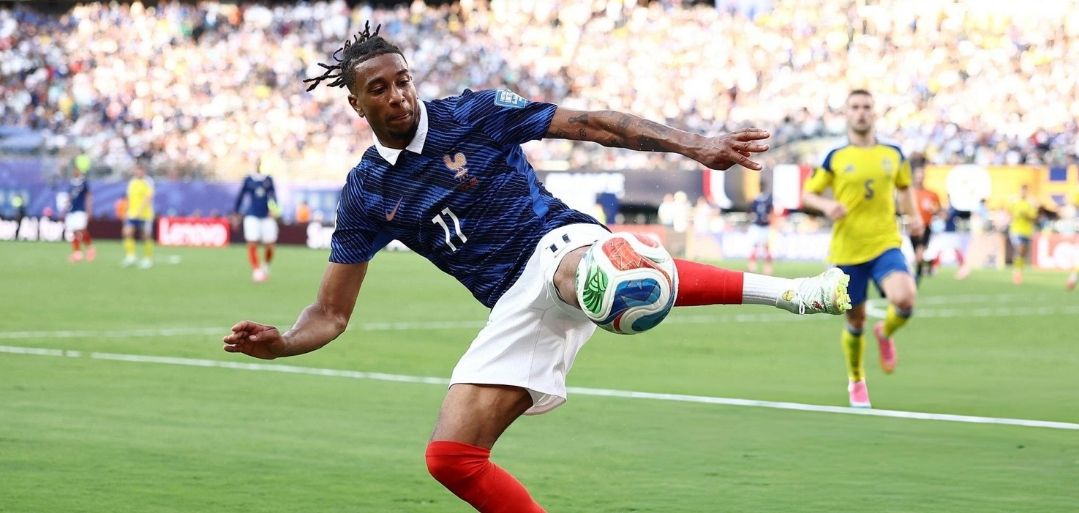
1. Michael Olise (France) — 7 Assists
French winger Michael Olise produced a historical performance during the summer tournament, establishing himself as the premier playmaker in world football.
Delivering a staggering seven assists across France’s campaign, Olise surpassed the legendary Brazilian icon Pelé’s 56-year-old record of six assists in a single tournament set back in 1970. Operating primarily from the right wing, his telepathic connection with French captain Kylian Mbappé unlocked defenses with frightening ease.
Five of his seven assists were converted directly by Mbappé, marking the most lethal creator-to-finisher partnership recorded in modern tournament history.
Olise started his record-setting campaign by setting up goals in the group stage against Senegal and Iraq before elevating his performance during the knockout rounds against Sweden and England.
His ability to cut inside on his favored left foot, whip curled crosses into dangerous areas, and execute intricate reverse passes made him virtually unmarkable.
During the thrilling third-place playoff, Olise registered two further assists to seal his place in the record books. His extraordinary creativity established him as the absolute standout technician of the FIFA World Cup.
2. Lionel Messi (Argentina) — 4 Assists
Even in the twilight of his international career, Argentine maestro Lionel Messi proved once again that his extraordinary vision remains unmatched on the international stage. Messi pulled the strings for La Albiceleste throughout their campaign, operating as a roving playmaker who consistently dictated the tempo of matches.
Registering four assists, Messi provided the crucial spark in tight encounters where Argentina needed moments of pure genius to break down compact defensive structures.
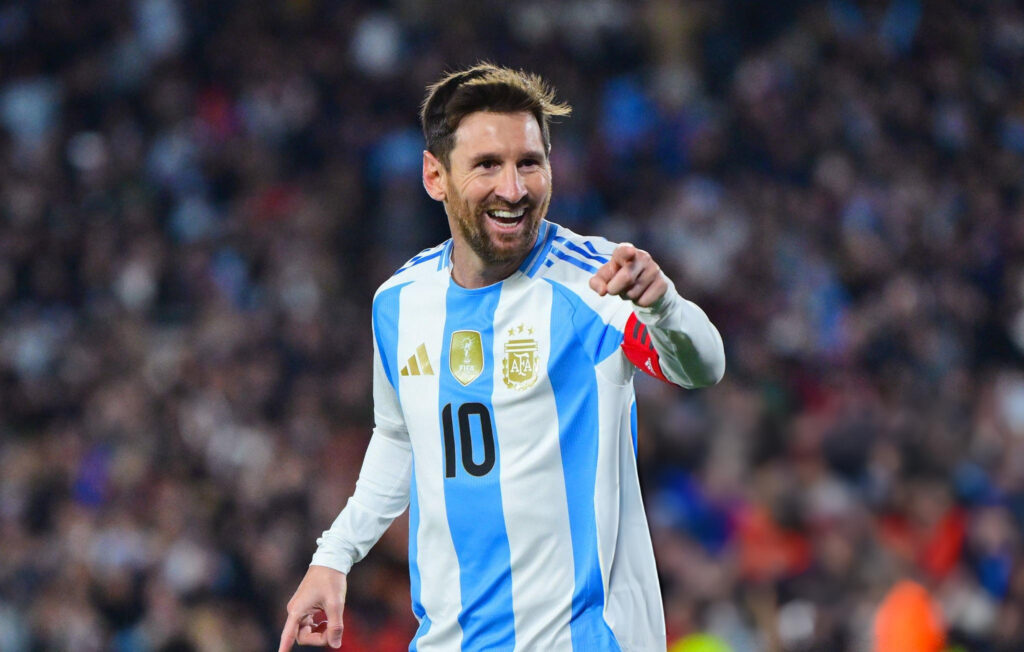
Messi’s four assists brought his total career count to 12 assists across six tournament editions, extending his record as the all-time leader in tournament assists.
His ability to operate between the lines, draw multiple defenders toward him, and slip subtle through-balls into the runs of overlapping wing-backs and strikers remained a cornerstone of Argentina’s tactical framework.
Whether setting up goals from set-piece deliveries or orchestrating counter-attacks from deep areas during a high-stakes World Cup match, Messi proved that his footballing intellect transcends physical age, delivering masterclass performances that captivated fans around the globe.
3. Kylian Mbappé (France) — 4 Assists
While world headlines rightfully celebrated Kylian Mbappé for his record-breaking goalscoring run, his contribution as a primary creator was equally vital to France’s fluid offensive structure. Mbappé provided four assists alongside his scoring feats, demonstrating his evolution into a complete, multi-dimensional forward.
Operating from both the left flank and central attack, Mbappé’s terrifying acceleration routinely drew double-teams from opposition defenders, creating vast spaces that he exploited to tee up his teammates.
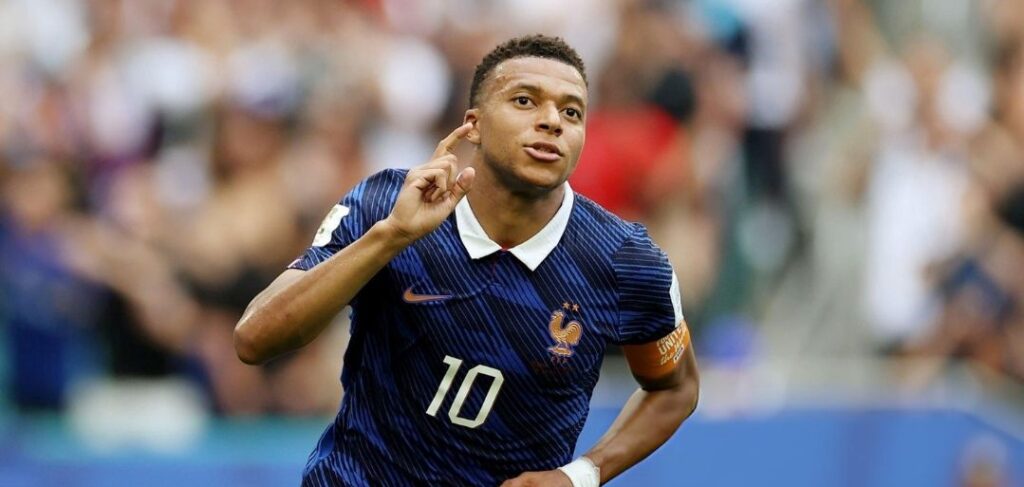
Mbappé’s ability to drive toward the opposition baseline before cutting sharp passes back into the penalty box proved lethal throughout the tournament. His creative repertoire went beyond pure pace; he displayed exquisite deft touches, delicate chipped passes over low blocks, and unselfish decision-making in high-pressure situations.
By balancing his insatiable appetite for goals with world-class playmaking vision, Mbappé demonstrated that top-tier football players can dictate games through both scoring and chance creation at the FIFA World Cup.
4. Bruno Guimarães (Brazil) — 4 Assists
Brazil’s midfield anchor Bruno Guimarães delivered a career-defining tournament, combining defensive resilience with world-class creative distribution. Operating in a central midfield role, Guimarães served as the primary deep-lying playmaker for A Seleção, connecting defense and attack with exceptional composure.
He accumulated four assists throughout the tournament, frequently delivering incisive long-range passes and line-breaking through-balls that unlocked opposition defensive lines.
What made Guimarães’ playmaking so effective was his ability to dictate the rhythm of the game under heavy pressing. Rather than relying solely on short recycling passes, Guimarães consistently looked forward, spotting the runs of Brazil’s dynamic wingers and picking them out with pinpoint accuracy.
His tactical intelligence enabled Brazil to execute swift transitional play, converting defensive regains into immediate scoring opportunities. His four assists proved that central midfielders remain the fundamental heartbeat of successful teams in every World Cup match.
5. Martin Ødegaard (Norway) — 4 Assists
Captain of a vibrant Norwegian side, Martin Ødegaard brought his trademark vision, pressing resistance, and technical elegance to North America. Leading Norway during their impressive run, Ødegaard accumulated four assists while operating in his natural attacking midfield zone.
His ability to receive the ball under pressure, spin away from challenges, and thread subtle passes through microscopic gaps in defense formed the backbone of Norway’s attacking strategy.
Ødegaard excelled in dead-ball situations and open-play orchestration alike. His delivery from set pieces repeatedly created high-probability scoring chances, while his sharp interplay around the edge of the eighteen-yard box routinely released Norwegian runners into dangerous spaces.
By finishing among the top creators of the FIFA World Cup, Ødegaard confirmed his reputation as one of the most gifted playmakers in global football, carrying his nation’s offensive weight with undeniable class.
6. Brahim Díaz (Morocco) — 4 Assists
Morocco continued their reputation for high-level international performances, driven in large part by the flair and inventiveness of Brahim Díaz. Operating with freedom across the attacking midfield line, Díaz provided four assists during Morocco’s campaign, thrilling fans with his low center of gravity, close control, and precise final ball execution.
His dribbling capacity regularly forced defenders out of position, creating numerical overloads that he exploited to set up his teammates.
Díaz was particularly effective in transition, taking advantage of open spaces left by aggressive opposition defenses. His quick decision-making allowed Morocco to execute rapid counter-attacks, where a single weighted pass from Díaz would put an attacker clear through on goal.
His standout displays cemented Morocco’s status as a formidable global force, with his four assists marking a highlight of the 2026 World Cup playmaking charts.
7. Roberto Alvarado (Mexico) — 3 Assists
Co-hosts Mexico energized home crowds with dynamic attacking displays, and Roberto Alvarado stood at the heart of their creative success. Providing three assists across the tournament, Alvarado’s energetic displays on the wing gave El Tri a reliable source of width and crossing quality.
His ability to beat his full-back on the outside and deliver accurate, whipped deliveries into the penalty box proved troublesome for every defense he faced.
Alvarado’s tactical flexibility allowed Mexican head coaches to deploy him in various roles without sacrificing his offensive production. Beyond his crossing, his sharp combination play in small spaces helped Mexico maintain sustained pressure in the opposition half.
By generating crucial goals in pivotal group stage and knockout fixtures, Alvarado etched his name among the top playmakers at the FIFA World Cup.
8. Florian Wirtz (Germany) — 3 Assists
Germany’s midfield prodigy Florian Wirtz demonstrated his elite playmaking credentials on the biggest stage, registering three assists during a highly competitive tournament run. Operating as an inverted playmaker, Wirtz excelled at finding space between opposition defensive and midfield lines.
His rapid scanning, half-turn technique, and immediate release enabled Germany to play through stubborn defensive setups with speed and flair.
Wirtz displayed remarkable poise in high-intensity moments, rarely giving away possession while constantly probing for high-value scoring chances. His three assists were complemented by high underlying expected assists metrics, reflecting the quality of chances he consistently created for German forwards.
As one of the premier young talents at the World Cup 2026, Wirtz showed that Germany’s creative future rests in safe, highly skilled hands.
9. Andreas Schjelderup (Norway) — 3 Assists
One of the standout breakout stars of the tournament, Norwegian winger Andreas Schjelderup provided dynamic support on the flank, contributing three assists.
Complementing Martin Ødegaard’s central orchestration, Schjelderup brought directness, pace, and unpredictable dribbling to Norway’s front line. His ability to isolate defenders one-on-one gave his team an immediate outlet when attacking wide areas.
Schjelderup’s three assists came from a mixture of low cutbacks and precise through-balls following sharp diagonal runs. His understanding with Norway’s forward line made the team’s attack balanced and dangerous from multiple angles.
His impressive output during the FIFA World Cup highlighted the depth of Norway’s emerging footballing talent and secured his position among the tournament’s elite playmakers.
10. Bukayo Saka (England) — 3 Assists
England’s Bukayo Saka enjoyed a memorable summer tournament, combining clinical goalscoring with top-tier chance creation. Operating on the right wing for the Three Lions, Saka recorded three assists alongside his goal tally, including crucial contributions during England’s bronze-medal campaign.
Saka’s consistency, direct running, and physical strength made him a constant threat against opposition left-backs. Saka’s playmaking strength lies in his clarity of thought inside the penalty box. Rather than rushing his final action, he routinely delays his pass to wait for optimal movement from arriving runners.
His accurate crosses and unselfish layoffs provided England with steady offensive output throughout their seven tournament fixtures. Saka’s performances reinforced his status as one of the most reliable wide operators at the FIFA World Cup.
11. Anthony Gordon (England) — 3 Assists
Rounding out the top 11 assist providers is English winger Anthony Gordon, who made a massive tactical impact with his explosive pace and relentless directness.
Gordon provided three assists during the tournament, using his speed to stretch opposition lines and create verticality in England’s possession play. His willingness to make aggressive off-the-ball runs behind defensive lines consistently put him in positions to serve dangerous balls into the box.
Gordon’s ability to win individual duels on the wing and immediately pick out a teammate in the box gave England an added dimension in tight matches.
His three assists proved crucial in breaking down stubborn opponents during both group play and the knockout rounds. Gordon’s inclusion among the leading playmakers of the 2026 World Cup capped off an extraordinary personal tournament for the dynamic winger.
Comparing the Playmaking Styles: Open Play vs. Set Pieces
Analyzing the underlying metrics of these top 11 playmakers reveals distinct tactical approaches to chance creation. Players like Michael Olise and Kylian Mbappé relied heavily on open-play combinations, using quick passing sequences and dynamic dribbling to break down defenses.
In contrast, creators like Martin Ødegaard and Lionel Messi excelled at combining open-play vision with high-level dead-ball execution, generating chances from corners and indirect free kicks.
The Evolutionary Role of the Playmaker in Modern Tournaments
The performance of these 11 playmakers highlights a broader tactical shift in international football. Modern defenses are more organized, compact, and physically demanding than ever before, making traditional central playmaking harder to sustain without high mobility.
As demonstrated throughout the FIFA World Cup, top creators must now operate from wide spaces, half-spaces, or deep central midfield positions to find time on the ball.
Furthermore, the synergy between wingers and central runners has become the single most effective weapon against low defensive blocks. Michael Olise’s record-breaking seven assists for France provided the ultimate template: a wide playmaker who cuts inside onto his stronger foot to deliver early, curling balls into the path of a fast, direct center-forward.
Teams that relied on static, single-dimensional playmaking struggled, whereas teams with multi-positional creators flourished in every World Cup match.
Looking Ahead to Future Tournaments
As the curtains fell on North America’s historic tournament, the legacy of its playmakers remains one of the defining narratives. The World Cup 2026 proved that while athletic demands and pressing intensity continue to rise, pure footballing intelligence and technical quality remain the ultimate deciding factors at the highest level of sport.
Fans around the world will look forward to seeing how these elite creators carry their international momentum back to club football, setting the standard for the next generation of creative stars at the FIFA World Cup.
Check full list of players with most assists in World Cup 2026 here!
Related Articles
Top 11 “False 9” in Football History (Ranked!)
Top 11 Youngest Champions League Goal Scorers in History
Top 11 Champions League Goal Scorers of All Time