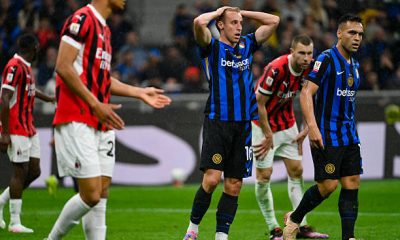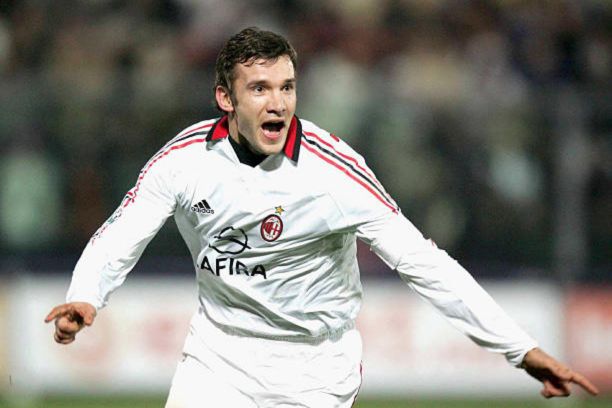
Few competitions have produced as many legendary goalscorers as Serie A. From the ruthless finishing of Silvio Piola to the extraordinary technique of Ronaldo Nazário, Italy’s top division has provided the stage for some of football’s most memorable attacking performances. Throughout its history, the league has been famous for disciplined defending, tactical intelligence, and intense rivalries. Yet even against the world’s toughest defenders, extraordinary forwards have consistently found ways to score, win championships, and inspire generations of supporters.
The history of Italian football is impossible to tell without celebrating the attackers who transformed matches with moments of brilliance. These players were more than goalscorers. They were leaders, entertainers, record-breakers, and, in many cases, the defining personalities of their clubs.
From the packed stadiums of Milan and Turin to the passionate supporters of Rome and Florence, Italy has witnessed unforgettable goals, remarkable individual performances, and fierce battles between some of the greatest attacking talents ever assembled. This expanded ranking counts down from number ten to number one, evaluating goals, talent, consistency, honours, longevity and historic significance rather than simply copying an all-time goalscoring table.
What Makes a Great Serie A Striker?
The greatest strikers in football history are not necessarily those who score the most goals. Goals are essential, but greatness involves more than statistics. An outstanding forward must possess intelligent positioning, composure under pressure, accurate finishing, technical superiority, and the ability to perform against elite opponents. In Italy, these qualities traditionally mattered because of the league’s reputation for sophisticated defensive systems.
Many Italian clubs built success around organized back lines and defenders trained to frustrate opponents. Consequently, scoring consistently required patience, creativity, and remarkable football intelligence. Another consideration is influence on a team’s achievements. A forward who scores decisive goals during a title campaign may leave a different legacy from an equally productive player who wins fewer trophies.
Longevity also matters. Some attackers maintained exceptional standards for more than a decade; others delivered breathtaking peaks during careers affected by injury. Comparing generations is difficult because playing surfaces, training, defensive systems and the number of fixtures have changed. The fairest approach is to judge each player’s achievements within his own era.
Top 10 Greatest Serie A Strikers in History
- Silvio Piola
- Gunnar Nordahl
- Giuseppe Meazza
- Francesco Totti
- Gabriel Batistuta
- Marco van Basten
- Ronaldo Nazário
- Andriy Shevchenko
- Alessandro Del Piero
- Christian Vieri
10. Christian Vieri
Christian Vieri was one of the most physically intimidating forwards of his generation. His powerful frame, heading ability, and instinctive finishing made him a constant threat to defenders. Born in Bologna in 1973, Vieri developed into an extraordinarily effective centre-forward whose reputation extended well beyond Italy. His career included successful spells in Spain and several Italian clubs, but his most memorable performances came at Inter Milan.
Vieri’s playing style was direct but extremely difficult to defend. He had the strength to hold off defenders, the movement to exploit space inside the penalty area and the finishing ability to convert difficult chances. Unlike forwards who relied on elaborate dribbling, he focused on arriving in dangerous positions and striking decisively. His powerful left foot produced shots from a variety of angles.
His Remarkable Years at Inter Milan
Vieri joined Inter in 1999 after playing for Lazio. He became a focal point of the team’s attack. Opponents knew that limiting his involvement was essential, but preventing him from scoring was another matter. In 2002–03, he finished as the league’s leading goalscorer with 24 goals, demonstrating his efficiency against well-organized defenses.
He could finish crosses with headers, convert close-range chances or produce spectacular strikes when the ball reached his stronger foot. Historical league records credit Vieri with 142 goals in 264 appearances in the Italian top division. Injuries and club changes did little to diminish the respect he commanded from defenders.
Why Vieri Belongs Among the Greats
Vieri represents the traditional centre-forward at his most dangerous. Although he did not enjoy the same domestic championship success as several other legends, his individual performances were outstanding. He proved that technique need not always mean flashy skills: intelligent movement, physical dominance and clean finishing could trouble even the most accomplished defenders.
9. Alessandro Del Piero
Alessandro Del Piero was the definition of elegance on a football pitch. His technical brilliance, extraordinary finishing and commitment to Juventus made him one of the most beloved figures in the Italian game. Born in Conegliano in 1974, he spent most of his professional career at Juventus and became the club’s record goalscorer across all competitions.
His influence went beyond scoring. Del Piero was a creative attacker capable of linking midfield and attack, delivering decisive passes and producing extraordinary individual goals. His curled finishes into the far corner became a recognizable signature, often described by supporters as gol alla Del Piero.
A Career Defined by Loyalty and Excellence
Joining Juventus in 1993, Del Piero developed into a central figure in a side that achieved domestic and European success. Defenders had to decide whether to move forward and challenge him, risking space behind, or allow him time to create opportunities. He was as effective providing precise passes as he was shooting himself.
His intelligence helped him adapt as he aged. Instead of depending only on speed, he used positioning, vision and impeccable technique. When Juventus were relegated in 2006 after the Calciopoli scandal, he remained with the club and helped bring it back to the top division, deepening his bond with supporters.
Lasting Influence on Italian Football
Del Piero scored 188 league goals. Yet his legacy rests on creativity and loyalty as much as goals. He showed how a second striker could influence different phases of play, inspire younger football players, and serve as a club’s enduring representative.
8. Andriy Shevchenko
Andriy Shevchenko arrived at AC Milan in 1999 and immediately proved that he possessed the skills to become one of Europe’s outstanding forwards. He combined explosive acceleration, clinical finishing, intelligent movement and composure. His ability to score with either foot or his head made him a complete attacking threat.
After gaining prominence at Dynamo Kyiv, he faced the challenge of adapting to a new country, language and tactical culture. His response was extraordinary.
An Extraordinary Beginning at AC Milan
Shevchenko scored 24 league goals in his debut season, becoming the competition’s leading goalscorer. He understood when to run behind defenders, when to move into wider spaces and when to remain central for crosses. His acceleration allowed him to escape defenders before they could react, while his first touch made him useful outside the box.
He scored another 24 league goals in 2003–04, helping Milan secure the championship. His performances that year contributed to winning the 2004 Ballon d’Or. He also helped Milan win the 2003 Champions League final against Juventus, converting the decisive penalty.
A Complete Modern Forward
Shevchenko could finish one-on-one opportunities, score from distance, attack crosses and create chances with his movement. Against compact defensive systems he did not wait passively in the area; he moved wide, received possession and combined with teammates. His versatility, professionalism and finishing established him among Milan’s greatest overseas players.
7. Ronaldo Nazário
Few attackers generated the excitement of Ronaldo Nazário. Known worldwide as O Fenômeno, he joined Inter Milan in 1997 after establishing himself as an extraordinary young talent. Ronaldo possessed speed, explosive acceleration, strength, close control and clinical finishing in an almost unprecedented combination.
He could receive the ball surrounded by defenders, accelerate through a narrow opening and create a scoring chance almost instantly. His dribbling at speed was unusual for a centre-forward, and his changes of direction made it extremely difficult to anticipate his next move.
Ronaldo’s Sensational First Season
In 1997–98 Ronaldo scored 25 league goals in 32 appearances. His stepovers, balance and acceleration regularly wrong-footed opponents, while his strength allowed him to stay upright during challenges. He helped Inter win the 1998 UEFA Cup, strengthening his reputation as one of the world’s foremost attackers.
Injuries and an Unforgettable Legacy
Serious knee injuries interrupted Ronaldo’s time at Inter and limited his league appearances. Inter’s historical records credit him with 49 goals in 68 domestic league games for the club, separate from his later AC Milan spell. His league total cannot convey his full influence. He helped redefine what a centre-forward could do, manufacturing opportunities through improvisation rather than merely waiting for service. His peak remains among the most memorable in Serie A history.
6. Marco van Basten
Marco van Basten was one of football’s most technically accomplished centre-forwards. The Dutch international combined elegance, positioning, aerial ability, movement and spectacular finishing. Joining AC Milan in 1987, he became central to one of Europe’s greatest teams.
Difficult actions often looked effortless when he performed them. His first touch controlled awkward passes, his balance created room to shoot and his striking technique made him dangerous from seemingly impossible angles.
The Heart of AC Milan’s Golden Generation
Van Basten played alongside Dutch stars Ruud Gullit and Frank Rijkaard. Under Arrigo Sacchi and Fabio Capello, Milan combined tactical discipline with outstanding attacking talent. Van Basten’s movement created opportunities for teammates, while his finishing gave the team a decisive edge. He could score powerful headers, delicate finishes and demanding volleys.
Defenders could not stop him by guarding a single area. He could drop deeper to link play or attack crosses with exceptional timing, adding unpredictability to Milan’s attack.
Three Ballon d’Or Awards and an Early Retirement
Van Basten won the Ballon d’Or in 1988, 1989 and 1992 and helped Milan secure three Italian titles and two European Cups. Recurrent ankle injuries ended his career early. Milan’s historical records credit him with 90 league goals in 147 appearances. His goal total was relatively modest because of injuries, but his brilliance at his best was extraordinary.
5. Gabriel Batistuta
Gabriel Batistuta was one of his generation’s most devastating finishers. Known as Batigol, the Argentine became famous for powerful shots, positioning and the ability to score spectacularly. After joining Fiorentina in 1991, he quickly became the defining figure of the club’s attack, forging an unusually strong connection with supporters.
His shots carried tremendous force, yet he also had the precision and instinct required to finish from close range. He could attack spaces behind defenders and create chances through individual effort, making him far more than a stationary target man.
A Legendary Career at Fiorentina
In 1994–95, Batistuta scored in 11 consecutive league matches, a remarkable record demonstrating his consistency. He had stayed with Fiorentina even when the club competed in Serie B in 1993–94, helping it return to the top flight. His loyalty strengthened his standing among supporters, who remembered his commitment alongside his goals.
The Move to Roma and a Long-Awaited Title
Batistuta joined AS Roma in 2000 and scored 20 league goals in 2000–01 as the club won the championship. After years as Fiorentina’s hero, he finally achieved the Italian title that had eluded him. Historical compilations vary slightly in his total, commonly listing 183 or 184 league goals.
Why Batistuta Remains an Icon
Batistuta represented loyalty, determination and relentless attacking intent. At Roma, his experience helped turn a talented squad into winners. His shooting power and goalscoring instincts remain synonymous with the enduring appeal of Serie A.
4. Francesco Totti
Francesco Totti is one of the most iconic figures in the history of Italian football. Born in Rome in 1976, he developed through the club’s youth system, made his senior debut in 1993 and spent his entire senior playing career with AS Roma. Although frequently deployed deeper than a conventional centre-forward, his goalscoring achievements place him among the finest attacking players in Italian history.
A Different Type of Goalscorer
Totti regularly dropped into midfield to receive possession and initiate attacks. His exceptional passing allowed him to identify movements others overlooked. He combined weighted through balls, long-range strikes, free kicks and clever chipped finishes. His famous cucchiaio became a trademark.
When faced with compact defenses, Totti knew how to find small spaces between the lines and create chances either for himself or teammates. His combination of vision and finishing made his role difficult to categorize.
The Historic 2000–01 Championship
Totti helped lead Roma to its celebrated 2000–01 league title alongside Gabriel Batistuta and Vincenzo Montella. His technique and leadership were central to the team’s identity. Even as managers and teammates changed, he continued to influence games through experience and football intelligence.
An Extraordinary Goalscoring Record
Totti scored 250 Italian top-flight goals, second only to Silvio Piola in the standard all-time table. This record is particularly striking because he spent many seasons creating chances rather than operating as a pure striker. He won the European Golden Shoe in 2007 after scoring 26 league goals in 2006–07.
A Legacy Beyond Statistics
In an era of frequent transfers, Totti’s decision to remain with his hometown club made him a symbol of identity and loyalty. His balance of creativity, leadership and goalscoring inspired generations of football players and made him a defining figure in Roma history.
3. Giuseppe Meazza
Giuseppe Meazza was among the first global stars of Italian football. Born in Milan in 1910, he emerged when professional football was gaining popularity in Europe. His close control, intelligent movement and instinct for scoring made him synonymous with Inter’s early success. Milan’s San Siro stadium was officially named after him in 1980.
A Pioneer of Attacking Excellence
Meazza played in an era of less sophisticated pitches, equipment and training methods. Still, his technique allowed him to create opportunities under heavy physical pressure. He combined the instincts of a goalscorer with the creativity of an inside forward, dribbling past opponents and participating in attacking moves.
Club Success and International Recognition
His exploits helped Inter win domestic championships, and he contributed to Italy’s World Cup victories in 1934 and 1938, captaining the national team in the latter tournament. These international successes provide context for the standing he enjoyed as a player of uncommon technical quality and leadership.
His Place Among the Greatest
Meazza scored 216 goals in the single-group Italian league era, equal to José Altafini. That tally remains extraordinary given the conditions and professional limitations of his generation. His achievements helped build the international reputation of Serie A and inspired subsequent Italian stars.
2. Gunnar Nordahl
Gunnar Nordahl was one of European football’s most prolific forwards. The Swedish international joined AC Milan in 1949 and transformed its attack through strength, intelligence and remarkably reliable finishing. He knew where the ball was likely to arrive and often reached the most dangerous position before opposing defenders could react.
The Rise of a Milan Goalscorer
Nordahl became the focal point of Milan’s attack, forming part of the famous Swedish trio Gre-No-Li alongside Gunnar Gren and Nils Liedholm. Their partnership combined creativity with movement and efficient finishing, helping make Milan a major European force. Nordahl’s off-ball intelligence made him especially effective at converting the chances his teammates created.
Five Italian League Top-Scorer Awards
Nordahl won the Italian league’s top-scorer award five times: 1949–50, 1950–51, 1952–53, 1953–54 and 1954–55. He scored 35 league goals in 1949–50, a spectacular total that remained a benchmark for decades. Repeating such achievements against disciplined Italian defenses showed exceptional ability.
An Exceptional Goals-Per-Game Record
Nordahl scored 225 goals in 291 league appearances, approximately 0.77 per match. Few legendary forwards have matched his efficiency across a comparable period. His scoring helped establish Milan’s international stature and demonstrated how imported talent enriched Serie A.
1. Silvio Piola
Silvio Piola occupies a unique position in Italian football history. Decades after retirement, his 274 top-flight goals remain the benchmark in the standard historical record. The achievement is especially striking because his career began in the late 1920s, when football was physically demanding and support systems were far more limited than today.
The Beginning of an Extraordinary Career
Piola started at Pro Vercelli, quickly displaying intelligent positioning, powerful shooting and composure under pressure. His reputation grew, leading to a move to Lazio in 1934. There he became one of the club’s defining goalscorers and one of the nation’s most respected forwards.
A Goalscoring Legacy Across Several Clubs
Piola represented Pro Vercelli, Lazio, Juventus and Novara. His success in different settings demonstrated adaptability and a natural understanding of scoring opportunities. He combined traditional centre-forward positioning with sound technique and attacking awareness.
The Record That Still Stands
Piola scored 274 goals in 537 appearances in the standard top-flight historical records. He stands ahead of Francesco Totti, Gunnar Nordahl and every other name on the all-time leaderboard. Generations of later forwards have enjoyed modern training, advanced recovery and analytical support, yet his record remains intact.
A World Cup Champion
Piola was also essential to Italy’s victory at the 1938 FIFA World Cup, scoring twice in the final against Hungary during a 4–2 victory. His performances confirmed that he could deliver on the biggest international stage.
Why Silvio Piola Ranks First
Debates about greatness are subjective. Some supporters favor Ronaldo’s individual talent or Van Basten’s technique, but Piola’s record, longevity and consistency provide a compelling case for first place. His name remains fundamental to any serious discussion of the greatest forwards in Serie A history.
Comparing the Greatest Serie A Strikers of All Time
The players in this ranking excelled through different strengths. The following table captures their main historical league figures. Ronaldo’s number is for Inter only, and Batistuta’s historical total varies slightly between sources.
Which Striker Had the Greatest Natural Ability?
Ronaldo Nazário and Marco van Basten deserve special consideration. Ronaldo’s acceleration and dribbling made him nearly impossible to contain at his peak. Van Basten combined extraordinary technique with positional intelligence and precision. Both showed that Serie A could attract and challenge the world’s most gifted attackers.
Which Striker Was the Most Consistent Goalscorer?
Gunnar Nordahl’s goals-per-game ratio makes him an outstanding candidate, while Silvio Piola’s achievement reflects extraordinary longevity. The best strikers should be judged through both their peaks and their sustained contributions.
Conclusion
The history of Serie A is filled with legendary attacking performances and remarkable individual achievements. From Vieri’s physical dominance and Del Piero’s elegance to Ronaldo’s speed and Van Basten’s technical perfection, each generation has produced forwards who changed expectations.
Batistuta embodied power and loyalty. Totti represented creativity and devotion to one club. Meazza helped establish the league’s reputation, while Nordahl demonstrated extraordinary scoring efficiency. Piola earns first place here through his record, consistency and historical importance.
Greatness is not measured solely through goals. The most memorable players combine talent, personality, leadership and the ability to decide important moments. For supporters following modern football news, these legends remain essential reference points. As new stars emerge, Serie A will continue producing extraordinary attacking talent, but the achievements of these legends will always matter.
Frequently Asked Questions About Serie A Strikers
Question 1: Who is the greatest Serie A striker of all time?
Ans: Silvio Piola has a compelling claim because he remains the historical leading scorer with 274 goals. Those prioritizing peak technical brilliance may prefer Ronaldo Nazário or Marco van Basten.
Question 2: Who has scored the most goals in Serie A history?
Ans: Silvio Piola leads the historical Serie A table with 274 goals. Francesco Totti is next with 250, followed by Gunnar Nordahl with 225.
Question 3: Which foreign striker was the most successful in Serie A?
Ans: By historical league goals, Gunnar Nordahl leads foreign-born players with 225. Marco van Basten and Andriy Shevchenko also earned major team and individual honours.
Question 4: Was Ronaldo Nazário the best striker in Serie A history?
Ans: Ronaldo was arguably one of the most naturally gifted forwards to play in Italy. His dribbling, pace and finishing were extraordinary, but serious injuries restricted his appearances.
Question 5: Why is Serie A famous for great defenders and strikers?
Ans: Serie A developed a reputation for disciplined defending and tactical competition. Attackers who succeeded in that environment often demonstrated exceptional intelligence, composure and finishing.
Image Credit: GettyImages
Read more: Best Strikers in Serie A in Last 20 Years
Related Articles
Xabi Alonso at Chelsea: Too Soon to Panic? (Matchweek 4 Review)
Premier League: Top 7 Mind-Blowing Records Ever!
Bundesliga Transfer News: 10 Most Expensive Players Ever!
Top 11 Most Expensive Football Transfers in Ligue 1 History!